

LeetCode 题解工作台
分隔链表
给你一个头结点为 head 的单链表和一个整数 k ,请你设计一个算法将链表分隔为 k 个连续的部分。 每部分的长度应该尽可能的相等:任意两部分的长度差距不能超过 1 。这可能会导致有些部分为 null 。 这 k 个部分应该按照在链表中出现的顺序排列,并且排在前面的部分的长度应该大于或等于排在后面…
1
题型
5
代码语言
3
相关题
当前训练重点
中等 · 链表指针操作
答案摘要
我们先遍历链表,得到链表的长度 ,然后我们计算出平均长度 $\textit{cnt} = \lfloor \frac{n}{k} \rfloor$ 和余数 $\textit{mod} = n \bmod k$。那么对于前 个部分,每个部分的长度为 $\textit{cnt} + 1$,其余部分的长度为 。 接下来,我们只需要遍历链表,将链表分割成 个部分即可。


Interview AiBoxInterview AiBox 实时 AI 助手,陪你讲清 链表指针操作 题型思路
题目描述
给你一个头结点为 head 的单链表和一个整数 k ,请你设计一个算法将链表分隔为 k 个连续的部分。
每部分的长度应该尽可能的相等:任意两部分的长度差距不能超过 1 。这可能会导致有些部分为 null 。
这 k 个部分应该按照在链表中出现的顺序排列,并且排在前面的部分的长度应该大于或等于排在后面的长度。
返回一个由上述 k 部分组成的数组。
示例 1:
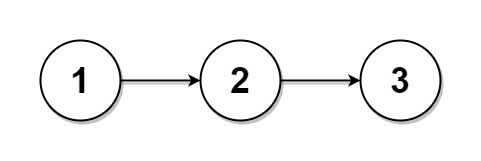
输入:head = [1,2,3], k = 5
输出:[[1],[2],[3],[],[]]
解释:
第一个元素 output[0] 为 output[0].val = 1 ,output[0].next = null 。
最后一个元素 output[4] 为 null ,但它作为 ListNode 的字符串表示是 [] 。
示例 2:

输入:head = [1,2,3,4,5,6,7,8,9,10], k = 3
输出:[[1,2,3,4],[5,6,7],[8,9,10]]
解释:
输入被分成了几个连续的部分,并且每部分的长度相差不超过 1 。前面部分的长度大于等于后面部分的长度。
提示:
- 链表中节点的数目在范围
[0, 1000] 0 <= Node.val <= 10001 <= k <= 50
解题思路
方法一:模拟
我们先遍历链表,得到链表的长度 ,然后我们计算出平均长度 和余数 。那么对于前 个部分,每个部分的长度为 ,其余部分的长度为 。
接下来,我们只需要遍历链表,将链表分割成 个部分即可。
时间复杂度 ,空间复杂度 。其中 为链表的长度。
# Definition for singly-linked list.
# class ListNode:
#     def __init__(self, val=0, next=None):
#         self.val = val
#         self.next = next
class Solution:
    def splitListToParts(
        self, head: Optional[ListNode], k: int
    ) -> List[Optional[ListNode]]:
        n = 0
        cur = head
        while cur:
            n += 1
            cur = cur.next
        cnt, mod = divmod(n, k)
        ans = [None] * k
        cur = head
        for i in range(k):
            if cur is None:
                break
            ans[i] = cur
            m = cnt + int(i < mod)
            for _ in range(1, m):
                cur = cur.next
            nxt = cur.next
            cur.next = None
            cur = nxt
        return ans
复杂度分析
| 指标 | 值 |
|---|---|
| 时间 | complexity is O(N) because each node is visited exactly once. Space complexity is O(1) aside from the output array, as the algorithm only manipulates pointers without allocating extra lists. |
| 空间 | O(1) |
面试官常问的追问
外企场景- question_mark
Check if the candidate correctly handles empty nodes and k larger than list length.
- question_mark
Watch for proper pointer disconnection to avoid cycles or shared references between parts.
- question_mark
Look for correct distribution of extra nodes to the first N % k parts for balanced sizing.
常见陷阱
外企场景- error
Failing to account for N % k extra nodes can lead to uneven part sizes.
- error
Incorrectly reconnecting next pointers may merge parts or corrupt the list.
- error
Returning parts out of order instead of preserving the original sequence.
进阶变体
外企场景- arrow_right_alt
Split into parts but return sizes instead of the actual sublists for a memory-efficient check.
- arrow_right_alt
Split a doubly linked list maintaining both next and previous pointers correctly.
- arrow_right_alt
Split linked list in parts with additional constraint that no part can be empty unless necessary.