

LeetCode 题解工作台
最小体力消耗路径
你准备参加一场远足活动。给你一个二维 rows x columns 的地图 heights ,其中 heights[row][col] 表示格子 (row, col) 的高度。一开始你在最左上角的格子 (0, 0) ,且你希望去最右下角的格子 (rows-1, columns-1) (注意下标从 0…
7
题型
5
代码语言
3
相关题
当前训练重点
中等 · 二分·搜索·答案·空间
答案摘要
对于本题,我们可以把每个格子当做图的一个节点,把相邻两个格子的高度差绝对值当做边的权重,因此本题是求解从最左上角的节点到最右下角的节点的连通性问题。 我们先构建一个边集,然后按照边的权重从小到大进行排序,逐个添加边,直到最左上角的节点和最右下角的节点连通为止,此时的边的权重就是题目的最小体力消耗值。


Interview AiBoxInterview AiBox 实时 AI 助手,陪你讲清 二分·搜索·答案·空间 题型思路
题目描述
你准备参加一场远足活动。给你一个二维 rows x columns 的地图 heights ,其中 heights[row][col] 表示格子 (row, col) 的高度。一开始你在最左上角的格子 (0, 0) ,且你希望去最右下角的格子 (rows-1, columns-1) (注意下标从 0 开始编号)。你每次可以往 上,下,左,右 四个方向之一移动,你想要找到耗费 体力 最小的一条路径。
一条路径耗费的 体力值 是路径上相邻格子之间 高度差绝对值 的 最大值 决定的。
请你返回从左上角走到右下角的最小 体力消耗值 。
示例 1:
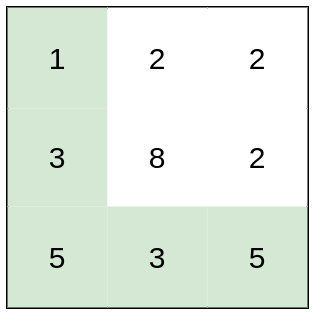
输入:heights = [[1,2,2],[3,8,2],[5,3,5]]
输出:2
解释:路径 [1,3,5,3,5] 连续格子的差值绝对值最大为 2 。
这条路径比路径 [1,2,2,2,5] 更优,因为另一条路径差值最大值为 3 。
示例 2:
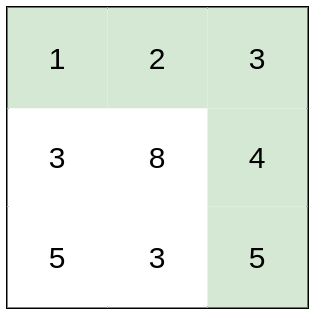
输入:heights = [[1,2,3],[3,8,4],[5,3,5]]
输出:1
解释:路径 [1,2,3,4,5] 的相邻格子差值绝对值最大为 1 ,比路径 [1,3,5,3,5] 更优。
示例 3:
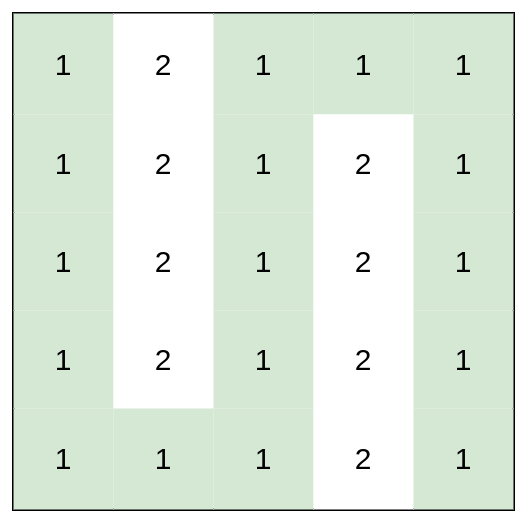
输入:heights = [[1,2,1,1,1],[1,2,1,2,1],[1,2,1,2,1],[1,2,1,2,1],[1,1,1,2,1]]
输出:0
解释:上图所示路径不需要消耗任何体力。
提示:
rows == heights.lengthcolumns == heights[i].length1 <= rows, columns <= 1001 <= heights[i][j] <= 106
解题思路
方法一:并查集
对于本题,我们可以把每个格子当做图的一个节点,把相邻两个格子的高度差绝对值当做边的权重,因此本题是求解从最左上角的节点到最右下角的节点的连通性问题。
我们先构建一个边集,然后按照边的权重从小到大进行排序,逐个添加边,直到最左上角的节点和最右下角的节点连通为止,此时的边的权重就是题目的最小体力消耗值。
时间复杂度 ,空间复杂度 。其中 和 分别是二维数组的行数和列数。
class UnionFind:
    def __init__(self, n):
        self.p = list(range(n))
        self.size = [1] * n

    def find(self, x):
        if self.p[x] != x:
            self.p[x] = self.find(self.p[x])
        return self.p[x]

    def union(self, a, b):
        pa, pb = self.find(a), self.find(b)
        if pa == pb:
            return False
        if self.size[pa] > self.size[pb]:
            self.p[pb] = pa
            self.size[pa] += self.size[pb]
        else:
            self.p[pa] = pb
            self.size[pb] += self.size[pa]
        return True

    def connected(self, a, b):
        return self.find(a) == self.find(b)


class Solution:
    def minimumEffortPath(self, heights: List[List[int]]) -> int:
        m, n = len(heights), len(heights[0])
        uf = UnionFind(m * n)
        e = []
        dirs = (0, 1, 0)
        for i in range(m):
            for j in range(n):
                for a, b in pairwise(dirs):
                    x, y = i + a, j + b
                    if 0 <= x < m and 0 <= y < n:
                        e.append(
                            (abs(heights[i][j] - heights[x][y]), i * n + j, x * n + y)
                        )
        e.sort()
        for h, a, b in e:
            uf.union(a, b)
            if uf.connected(0, m * n - 1):
                return h
        return 0
复杂度分析
| 指标 | 值 |
|---|---|
| 时间 | Depends on the final approach |
| 空间 | Depends on the final approach |
面试官常问的追问
外企场景- question_mark
Candidates should be able to identify the binary search pattern and the use of BFS/DFS for pathfinding.
- question_mark
Look for clarity in the explanation of the binary search strategy and its connection to grid traversal.
- question_mark
Watch for edge cases such as no height differences or minimal grid sizes.
常见陷阱
外企场景- error
Failing to recognize that the problem requires binary search over possible efforts rather than simply trying to traverse the grid directly.
- error
Not treating the grid as a graph and mistakenly thinking about each cell as an independent entity rather than part of a graph structure.
- error
Overlooking edge cases where no effort is required (e.g., all cells have the same height).
进阶变体
外企场景- arrow_right_alt
Consider applying the same approach to find the path with the minimum total effort rather than maximum effort.
- arrow_right_alt
Modify the problem to allow diagonal moves between cells and evaluate how it affects the approach.
- arrow_right_alt
Change the constraints, such as increasing the grid size or allowing negative heights, and analyze the impact on the algorithm.