

LeetCode 题解工作台
树上的操作
给你一棵 n 个节点的树,编号从 0 到 n - 1 ,以父节点数组 parent 的形式给出,其中 parent[i] 是第 i 个节点的父节点。树的根节点为 0 号节点,所以 parent[0] = -1 ,因为它没有父节点。你想要设计一个数据结构实现树里面对节点的加锁,解锁和升级操作。 数据结…
6
题型
5
代码语言
3
相关题
当前训练重点
中等 · 数组·哈希·扫描
答案摘要
我们定义以下几个变量: - :记录每个节点的锁定状态,其中 表示节点 的锁定状态,如果节点 未被上锁,则 $locked[i] = -1$,否则 为锁定节点 的用户编号。


Interview AiBoxInterview AiBox 实时 AI 助手,陪你讲清 数组·哈希·扫描 题型思路
题目描述
给你一棵 n 个节点的树,编号从 0 到 n - 1 ,以父节点数组 parent 的形式给出,其中 parent[i] 是第 i 个节点的父节点。树的根节点为 0 号节点,所以 parent[0] = -1 ,因为它没有父节点。你想要设计一个数据结构实现树里面对节点的加锁,解锁和升级操作。
数据结构需要支持如下函数:
- Lock:指定用户给指定节点 上锁 ,上锁后其他用户将无法给同一节点上锁。只有当节点处于未上锁的状态下,才能进行上锁操作。
- Unlock:指定用户给指定节点 解锁 ,只有当指定节点当前正被指定用户锁住时,才能执行该解锁操作。
- Upgrade:指定用户给指定节点 上锁 ,并且将该节点的所有子孙节点 解锁 。只有如下 3 个条件 全部 满足时才能执行升级操作:
- 指定节点当前状态为未上锁。
- 指定节点至少有一个上锁状态的子孙节点(可以是 任意 用户上锁的)。
- 指定节点没有任何上锁的祖先节点。
请你实现 LockingTree 类:
LockingTree(int[] parent)用父节点数组初始化数据结构。lock(int num, int user)如果 id 为user的用户可以给节点num上锁,那么返回true,否则返回false。如果可以执行此操作,节点num会被 id 为user的用户 上锁 。unlock(int num, int user)如果 id 为user的用户可以给节点num解锁,那么返回true,否则返回false。如果可以执行此操作,节点num变为 未上锁 状态。upgrade(int num, int user)如果 id 为user的用户可以给节点num升级,那么返回true,否则返回false。如果可以执行此操作,节点num会被 升级 。
示例 1:
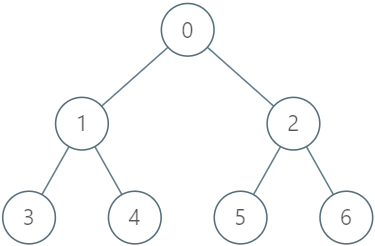
输入:
["LockingTree", "lock", "unlock", "unlock", "lock", "upgrade", "lock"]
[[[-1, 0, 0, 1, 1, 2, 2]], [2, 2], [2, 3], [2, 2], [4, 5], [0, 1], [0, 1]]
输出:
[null, true, false, true, true, true, false]

解释:
LockingTree lockingTree = new LockingTree([-1, 0, 0, 1, 1, 2, 2]);
lockingTree.lock(2, 2);    // 返回 true ,因为节点 2 未上锁。
                           // 节点 2 被用户 2 上锁。
lockingTree.unlock(2, 3);  // 返回 false ,因为用户 3 无法解锁被用户 2 上锁的节点。
lockingTree.unlock(2, 2);  // 返回 true ,因为节点 2 之前被用户 2 上锁。
                           // 节点 2 现在变为未上锁状态。
lockingTree.lock(4, 5);    // 返回 true ,因为节点 4 未上锁。
                           // 节点 4 被用户 5 上锁。
lockingTree.upgrade(0, 1); // 返回 true ,因为节点 0 未上锁且至少有一个被上锁的子孙节点(节点 4)。
                           // 节点 0 被用户 1 上锁,节点 4 变为未上锁。
lockingTree.lock(0, 1);    // 返回 false ,因为节点 0 已经被上锁了。
提示:
n == parent.length2 <= n <= 2000- 对于
i != 0,满足0 <= parent[i] <= n - 1 parent[0] == -10 <= num <= n - 11 <= user <= 104parent表示一棵合法的树。lock,unlock和upgrade的调用 总共 不超过2000次。
解题思路
方法一:DFS
我们定义以下几个变量:
- :记录每个节点的锁定状态,其中 表示节点 的锁定状态,如果节点 未被上锁,则 ,否则 为锁定节点 的用户编号。
- :记录每个节点的父节点。
- :记录每个节点的子节点。
调用 函数时,如果节点 未被上锁,则将节点 上锁,返回 true,否则返回 false。
调用 函数时,如果节点 被上锁且上锁的用户编号为 ,则将节点 解锁,返回 true,否则返回 false。
调用 函数时,我们首先判断节点 及其祖先节点是否被上锁,如果是,则返回 。否则,我们判断节点 的子孙节点是否有被上锁的,如果没有,则返回 false。否则,我们将节点 及其子孙节点解锁,然后将节点 上锁,返回 true。
时间复杂度方面,初始化和 函数的时间复杂度均为 ,而 和 函数的时间复杂度均为 。空间复杂度 。其中 是节点的数量。
class LockingTree:
    def __init__(self, parent: List[int]):
        n = len(parent)
        self.locked = [-1] * n
        self.parent = parent
        self.children = [[] for _ in range(n)]
        for son, fa in enumerate(parent[1:], 1):
            self.children[fa].append(son)

    def lock(self, num: int, user: int) -> bool:
        if self.locked[num] == -1:
            self.locked[num] = user
            return True
        return False

    def unlock(self, num: int, user: int) -> bool:
        if self.locked[num] == user:
            self.locked[num] = -1
            return True
        return False

    def upgrade(self, num: int, user: int) -> bool:
        def dfs(x: int):
            nonlocal find
            for y in self.children[x]:
                if self.locked[y] != -1:
                    self.locked[y] = -1
                    find = True
                dfs(y)

        x = num
        while x != -1:
            if self.locked[x] != -1:
                return False
            x = self.parent[x]

        find = False
        dfs(num)
        if not find:
            return False
        self.locked[num] = user
        return True


# Your LockingTree object will be instantiated and called as such:
# obj = LockingTree(parent)
# param_1 = obj.lock(num,user)
# param_2 = obj.unlock(num,user)
# param_3 = obj.upgrade(num,user)
复杂度分析
| 指标 | 值 |
|---|---|
| 时间 | Depends on the final approach |
| 空间 | Depends on the final approach |
面试官常问的追问
外企场景- question_mark
Candidate efficiently designs data structures for dynamic operations on trees.
- question_mark
Look for clear explanations of array and hash table usage to manage state.
- question_mark
Focus on the trade-off between tree traversal and hash lookups for optimized performance.
常见陷阱
外企场景- error
Overcomplicating the tree traversal logic during upgrade operations.
- error
Incorrectly handling lock/unlock state changes across multiple users.
- error
Not considering edge cases, such as trying to unlock a node locked by another user.
进阶变体
外企场景- arrow_right_alt
Add a query function to check if a node is locked.
- arrow_right_alt
Allow multiple users to lock the same node with different states.
- arrow_right_alt
Optimize for memory usage by using a more compact data structure for large trees.