

LeetCode 题解工作台
链表中的下一个更大节点
给定一个长度为 n 的链表 head 对于列表中的每个节点,查找下一个 更大节点 的值。也就是说,对于每个节点,找到它旁边的第一个节点的值,这个节点的值 严格大于 它的值。 返回一个整数数组 answer ,其中 answer[i] 是第 i 个节点( 从1开始 )的下一个更大的节点的值。如果第 i…
4
题型
7
代码语言
3
相关题
当前训练重点
中等 · 链表指针操作
答案摘要
题目要求找到链表中每个节点的下一个更大的节点,即找到链表中每个节点的右边第一个比它大的节点。我们先遍历链表,将链表中的值存入数组 中。那么对于数组 中的每个元素,我们只需要找到它右边第一个比它大的元素即可。求下一个更大的元素的问题可以使用单调栈来解决。 我们从后往前遍历数组 ,维护一个从栈底到栈顶单调递减的栈 ,遍历过程中,如果栈顶元素小于等于当前元素,则循环将栈顶元素出栈,直到栈顶元素大于当…


Interview AiBoxInterview AiBox 实时 AI 助手,陪你讲清 链表指针操作 题型思路
题目描述
给定一个长度为 n 的链表 head
对于列表中的每个节点,查找下一个 更大节点 的值。也就是说,对于每个节点,找到它旁边的第一个节点的值,这个节点的值 严格大于 它的值。
返回一个整数数组 answer ,其中 answer[i] 是第 i 个节点( 从1开始 )的下一个更大的节点的值。如果第 i 个节点没有下一个更大的节点,设置 answer[i] = 0 。
示例 1:
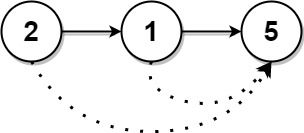
输入:head = [2,1,5]
输出:[5,5,0]
示例 2:
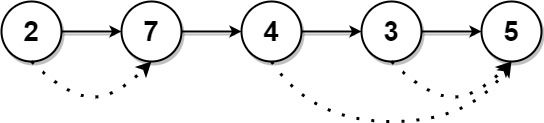
输入:head = [2,7,4,3,5]
输出:[7,0,5,5,0]
提示:
- 链表中节点数为
n 1 <= n <= 1041 <= Node.val <= 109
解题思路
方法一:单调栈
题目要求找到链表中每个节点的下一个更大的节点,即找到链表中每个节点的右边第一个比它大的节点。我们先遍历链表,将链表中的值存入数组 中。那么对于数组 中的每个元素,我们只需要找到它右边第一个比它大的元素即可。求下一个更大的元素的问题可以使用单调栈来解决。
我们从后往前遍历数组 ,维护一个从栈底到栈顶单调递减的栈 ,遍历过程中,如果栈顶元素小于等于当前元素,则循环将栈顶元素出栈,直到栈顶元素大于当前元素或者栈为空。
如果此时栈为空,则说明当前元素没有下一个更大的元素,否则当前元素的下一个更大的元素就是栈顶元素,更新答案数组 。然后将当前元素入栈,继续遍历。
遍历结束后,返回答案数组 即可。
时间复杂度 ,空间复杂度 。其中 为链表的长度。
# Definition for singly-linked list.
# class ListNode:
#     def __init__(self, val=0, next=None):
#         self.val = val
#         self.next = next
class Solution:
    def nextLargerNodes(self, head: Optional[ListNode]) -> List[int]:
        nums = []
        while head:
            nums.append(head.val)
            head = head.next
        stk = []
        n = len(nums)
        ans = [0] * n
        for i in range(n - 1, -1, -1):
            while stk and stk[-1] <= nums[i]:
                stk.pop()
            if stk:
                ans[i] = stk[-1]
            stk.append(nums[i])
        return ans
复杂度分析
| 指标 | 值 |
|---|---|
| 时间 | complexity is O(n) because each node is pushed and popped at most once from the stack. Space complexity is O(n) for storing the array of node values and the stack. |
| 空间 | O(n) |
面试官常问的追问
外企场景- question_mark
Expecting use of a monotonic stack to efficiently track next greater elements in a linked list context.
- question_mark
Looking for correct handling of node indexing when mapping linked list to array.
- question_mark
Assessing understanding of linear-time solutions versus naive O(n^2) traversal approaches.
常见陷阱
外企场景- error
Forgetting to convert the linked list into an array first, which complicates index-based stack management.
- error
Incorrectly popping from the stack too early or late, leading to wrong next greater assignments.
- error
Failing to set remaining nodes to 0 after stack processing, resulting in incomplete output.
进阶变体
外企场景- arrow_right_alt
Finding next smaller node instead of next greater, adjusting stack condition accordingly.
- arrow_right_alt
Applying the pattern to a circular linked list where next greater may wrap around to the start.
- arrow_right_alt
Handling multiple linked lists simultaneously, requiring separate stacks or merged tracking.