

LeetCode 题解工作台
有向图访问计数
现有一个有向图,其中包含 n 个节点,节点编号从 0 到 n - 1 。此外,该图还包含了 n 条有向边。 给你一个下标从 0 开始的数组 edges ,其中 edges[i] 表示存在一条从节点 i 到节点 edges[i] 的边。 想象在图上发生以下过程: 你从节点 x 开始,通过边访问其他节点…
3
题型
5
代码语言
3
相关题
当前训练重点
困难 · 状态·转移·动态规划
答案摘要
我们可以用一个数组 记录每个节点的答案,用一个数组 记录每个节点的访问次序。 遍历每个节点 ,如果当前节点 未被访问,我们就从节点 开始遍历,此时有两种情况:


Interview AiBoxInterview AiBox 实时 AI 助手,陪你讲清 状态·转移·动态规划 题型思路
题目描述
现有一个有向图,其中包含 n 个节点,节点编号从 0 到 n - 1 。此外,该图还包含了 n 条有向边。
给你一个下标从 0 开始的数组 edges ,其中 edges[i] 表示存在一条从节点 i 到节点 edges[i] 的边。
想象在图上发生以下过程:
- 你从节点
x开始,通过边访问其他节点,直到你在 此过程 中再次访问到之前已经访问过的节点。
返回数组 answer 作为答案,其中 answer[i] 表示如果从节点 i 开始执行该过程,你可以访问到的不同节点数。
示例 1:
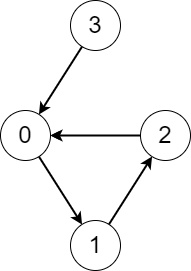
输入:edges = [1,2,0,0]
输出:[3,3,3,4]
解释:从每个节点开始执行该过程,记录如下:
- 从节点 0 开始,访问节点 0 -> 1 -> 2 -> 0 。访问的不同节点数是 3 。
- 从节点 1 开始,访问节点 1 -> 2 -> 0 -> 1 。访问的不同节点数是 3 。
- 从节点 2 开始,访问节点 2 -> 0 -> 1 -> 2 。访问的不同节点数是 3 。
- 从节点 3 开始,访问节点 3 -> 0 -> 1 -> 2 -> 0 。访问的不同节点数是 4 。
示例 2:
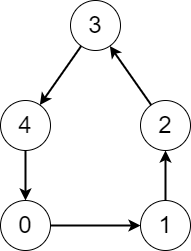
输入:edges = [1,2,3,4,0]
输出:[5,5,5,5,5]
解释:无论从哪个节点开始,在这个过程中,都可以访问到图中的每一个节点。
提示:
n == edges.length2 <= n <= 1050 <= edges[i] <= n - 1edges[i] != i
解题思路
方法一:基环树 + 遍历搜索
我们可以用一个数组 记录每个节点的答案,用一个数组 记录每个节点的访问次序。
遍历每个节点 ,如果当前节点 未被访问,我们就从节点 开始遍历,此时有两种情况:
- 如果遍历过程中,遇到了当前节点出发时走过的节点,那么此次遍历,一定是先走到了环内,然后沿着环走了一圈。对于环外的节点,其答案就是环的长度加上节点到环的距离;对于环内的节点,其答案就是环的长度。
- 如果遍历过程中,遇到了此前节点出发时走过的节点,那么对于每个走过的节点,其答案就是当前节点到此节点的距离,加上此节点的答案。
时间复杂度 ,空间复杂度 。其中 是数组 的长度。
class Solution:
    def countVisitedNodes(self, edges: List[int]) -> List[int]:
        n = len(edges)
        ans = [0] * n
        vis = [0] * n
        for i in range(n):
            if not ans[i]:
                cnt, j = 0, i
                while not vis[j]:
                    cnt += 1
                    vis[j] = cnt
                    j = edges[j]
                cycle, total = 0, cnt + ans[j]
                if not ans[j]:
                    cycle = cnt - vis[j] + 1
                    total = cnt
                j = i
                while not ans[j]:
                    ans[j] = max(total, cycle)
                    total -= 1
                    j = edges[j]
        return ans
复杂度分析
| 指标 | 值 |
|---|---|
| 时间 | Depends on the final approach |
| 空间 | Depends on the final approach |
面试官常问的追问
外企场景- question_mark
The candidate demonstrates a strong understanding of dynamic programming techniques, especially state transitions and memoization.
- question_mark
The candidate recognizes the importance of cycle detection and how to handle it efficiently in graph traversal problems.
- question_mark
The candidate's ability to reduce complexity by avoiding redundant computations shows effective problem-solving skills.
常见陷阱
外企场景- error
Failing to handle graph cycles correctly, which could lead to infinite loops during traversal.
- error
Not using memoization, resulting in excessive recalculations and poor performance for large inputs.
- error
Overlooking the edge case where every node is part of a cycle, which could lead to incorrect results.
进阶变体
外企场景- arrow_right_alt
Consider a scenario where the graph is a tree instead of a cycle. How would the solution differ?
- arrow_right_alt
Modify the problem to allow multiple edges between nodes. How would this affect the solution?
- arrow_right_alt
What if the graph has directed edges with weights? How would this impact the dynamic programming approach?