

LeetCode 题解工作台
奇怪的打印机 II
给你一个奇怪的打印机,它有如下两个特殊的打印规则: 每一次操作时,打印机会用同一种颜色打印一个矩形的形状,每次打印会覆盖矩形对应格子里原本的颜色。 一旦矩形根据上面的规则使用了一种颜色,那么 相同的颜色不能再被使用 。 给你一个初始没有颜色的 m x n 的矩形 targetGrid ,其中 tar…
4
题型
0
代码语言
3
相关题
当前训练重点
困难 · 图


Interview AiBoxInterview AiBox 实时 AI 助手,陪你讲清 图 题型思路
题目描述
给你一个奇怪的打印机,它有如下两个特殊的打印规则:
- 每一次操作时,打印机会用同一种颜色打印一个矩形的形状,每次打印会覆盖矩形对应格子里原本的颜色。
- 一旦矩形根据上面的规则使用了一种颜色,那么 相同的颜色不能再被使用 。
给你一个初始没有颜色的 m x n 的矩形 targetGrid ,其中 targetGrid[row][col] 是位置 (row, col) 的颜色。
如果你能按照上述规则打印出矩形 targetGrid ,请你返回 true ,否则返回 false 。
示例 1:
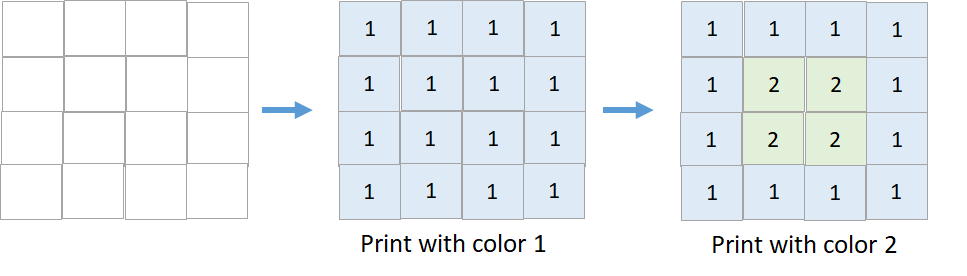
输入:targetGrid = [[1,1,1,1],[1,2,2,1],[1,2,2,1],[1,1,1,1]]
输出:true
示例 2:

输入:targetGrid = [[1,1,1,1],[1,1,3,3],[1,1,3,4],[5,5,1,4]]
输出:true
示例 3:
输入:targetGrid = [[1,2,1],[2,1,2],[1,2,1]]
输出:false
解释:没有办法得到 targetGrid ,因为每一轮操作使用的颜色互不相同。
示例 4:
输入:targetGrid = [[1,1,1],[3,1,3]]
输出:false
提示:
m == targetGrid.lengthn == targetGrid[i].length1 <= m, n <= 601 <= targetGrid[row][col] <= 60
解题思路
方法一
复杂度分析
| 指标 | 值 |
|---|---|
| 时间 | Depends on the final approach |
| 空间 | Depends on the final approach |
面试官常问的追问
外企场景- question_mark
The hint about thinking in reverse is a strong signal to identify which color could have been printed last.
- question_mark
The small color range up to 60 suggests modeling colors as graph nodes instead of treating every cell as a state.
- question_mark
If overlapping rectangles seem to force ordering constraints, the expected pattern is indegree plus topological ordering.
常见陷阱
外企场景- error
Adding dependencies in the wrong direction is the most common bug; if color d appears inside color c's rectangle, then c must come before d.
- error
Forgetting to deduplicate edges can inflate indegrees and make an acyclic Strange Printer II instance look impossible.
- error
Trying to simulate forward painting cell by cell misses the one-rectangle-per-color rule and gets stuck on overwrite order.
进阶变体
外企场景- arrow_right_alt
Replace topological sort with repeated elimination: remove any color whose rectangle currently contains only itself or already removed colors.
- arrow_right_alt
Ask for one valid print order instead of just true or false; the topological order directly provides it when no cycle exists.
- arrow_right_alt
Generalize the same rectangle-dependency idea to grids where symbols form layers and the task is to detect cyclic overwrite constraints.