

LeetCode 题解工作台
出现频率最高的质数
给你一个大小为 m x n 、下标从 0 开始的二维矩阵 mat 。在每个单元格,你可以按以下方式生成数字: 最多有 8 条路径可以选择:东,东南,南,西南,西,西北,北,东北。 选择其中一条路径,沿着这个方向移动,并且将路径上的数字添加到正在形成的数字后面。 注意,每一步都会生成数字,例如,如果路…
7
题型
5
代码语言
3
相关题
当前训练重点
中等 · 数组·哈希·扫描
答案摘要
我们可以使用哈希表来统计每个大于 10 的素数出现的次数。 对于每个单元格,我们可以从它出发,沿着 8 个方向之一生成数字,然后判断生成的数字是否是大于 的素数,如果是的话,就将它加入到哈希表中。


Interview AiBoxInterview AiBox 实时 AI 助手,陪你讲清 数组·哈希·扫描 题型思路
题目描述
给你一个大小为 m x n 、下标从 0 开始的二维矩阵 mat 。在每个单元格,你可以按以下方式生成数字:
- 最多有
8条路径可以选择:东,东南,南,西南,西,西北,北,东北。 - 选择其中一条路径,沿着这个方向移动,并且将路径上的数字添加到正在形成的数字后面。
- 注意,每一步都会生成数字,例如,如果路径上的数字是
1, 9, 1,那么在这个方向上会生成三个数字:1, 19, 191。
返回在遍历矩阵所创建的所有数字中,出现频率最高的、大于 10的质数;如果不存在这样的质数,则返回 -1 。如果存在多个出现频率最高的质数,那么返回其中最大的那个。
注意:移动过程中不允许改变方向。
示例 1:
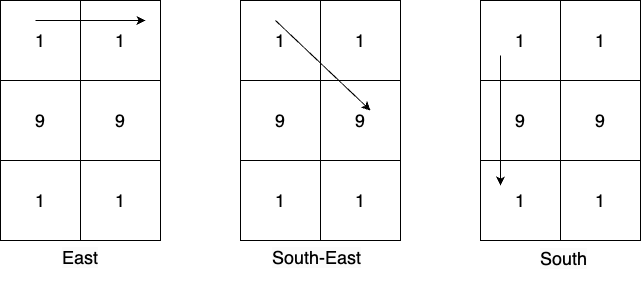
输入:mat = [[1,1],[9,9],[1,1]]
输出:19
解释:
从单元格 (0,0) 出发,有 3 个可能的方向,这些方向上可以生成的大于 10 的数字有:
东方向: [11], 东南方向: [19], 南方向: [19,191] 。
从单元格 (0,1) 出发,所有可能方向上生成的大于 10 的数字有:[19,191,19,11] 。
从单元格 (1,0) 出发,所有可能方向上生成的大于 10 的数字有:[99,91,91,91,91] 。
从单元格 (1,1) 出发,所有可能方向上生成的大于 10 的数字有:[91,91,99,91,91] 。
从单元格 (2,0) 出发,所有可能方向上生成的大于 10 的数字有:[11,19,191,19] 。
从单元格 (2,1) 出发,所有可能方向上生成的大于 10 的数字有:[11,19,19,191] 。
在所有生成的数字中,出现频率最高的质数是 19 。
示例 2:
输入:mat = [[7]]
输出:-1
解释:唯一可以生成的数字是 7 。它是一个质数,但不大于 10 ,所以返回 -1 。
示例 3:
输入:mat = [[9,7,8],[4,6,5],[2,8,6]]
输出:97
解释:
从单元格 (0,0) 出发,所有可能方向上生成的大于 10 的数字有: [97,978,96,966,94,942] 。
从单元格 (0,1) 出发,所有可能方向上生成的大于 10 的数字有: [78,75,76,768,74,79] 。
从单元格 (0,2) 出发,所有可能方向上生成的大于 10 的数字有: [85,856,86,862,87,879] 。
从单元格 (1,0) 出发,所有可能方向上生成的大于 10 的数字有: [46,465,48,42,49,47] 。
从单元格 (1,1) 出发,所有可能方向上生成的大于 10 的数字有: [65,66,68,62,64,69,67,68] 。
从单元格 (1,2) 出发,所有可能方向上生成的大于 10 的数字有: [56,58,56,564,57,58] 。
从单元格 (2,0) 出发,所有可能方向上生成的大于 10 的数字有: [28,286,24,249,26,268] 。
从单元格 (2,1) 出发,所有可能方向上生成的大于 10 的数字有: [86,82,84,86,867,85] 。
从单元格 (2,2) 出发,所有可能方向上生成的大于 10 的数字有: [68,682,66,669,65,658] 。
在所有生成的数字中,出现频率最高的质数是 97 。
提示:
m == mat.lengthn == mat[i].length1 <= m, n <= 61 <= mat[i][j] <= 9
解题思路
方法一:哈希表 + 枚举
我们可以使用哈希表来统计每个大于 10 的素数出现的次数。
对于每个单元格,我们可以从它出发,沿着 8 个方向之一生成数字,然后判断生成的数字是否是大于 的素数,如果是的话,就将它加入到哈希表中。
最后,我们遍历哈希表,找到出现频率最高的质数,如果有多个出现频率最高的质数,那么返回其中最大的那个。
时间复杂度 ,空间复杂度 。其中 和 分别是 mat 的行数和列数。
class Solution:
    def mostFrequentPrime(self, mat: List[List[int]]) -> int:
        def is_prime(x: int) -> int:
            return all(x % i != 0 for i in range(2, isqrt(x) + 1))

        m, n = len(mat), len(mat[0])
        cnt = Counter()
        for i in range(m):
            for j in range(n):
                for a in range(-1, 2):
                    for b in range(-1, 2):
                        if a == 0 and b == 0:
                            continue
                        x, y, v = i + a, j + b, mat[i][j]
                        while 0 <= x < m and 0 <= y < n:
                            v = v * 10 + mat[x][y]
                            if is_prime(v):
                                cnt[v] += 1
                            x, y = x + a, y + b
        ans, mx = -1, 0
        for v, x in cnt.items():
            if mx < x:
                mx = x
                ans = v
            elif mx == x:
                ans = max(ans, v)
        return ans
复杂度分析
| 指标 | 值 |
|---|---|
| 时间 | complexity depends on the number of cells m _n and the maximum number length generated from each cell, roughly O(m_ n*maxLen). Space complexity is dominated by the hash map storing generated numbers, O(uniqueNumbers). |
| 空间 | Depends on the final approach |
面试官常问的追问
外企场景- question_mark
Checks if you can efficiently explore all paths from each cell using recursion.
- question_mark
Observes if you can apply a hash map to track number frequencies correctly.
- question_mark
Tests your ability to combine number theory with array scanning patterns.
常见陷阱
外企场景- error
Failing to stop recursion when moving out of matrix bounds.
- error
Counting non-prime numbers or primes less than or equal to 10.
- error
Incorrectly choosing between tied primes without selecting the largest.
进阶变体
外企场景- arrow_right_alt
Return the smallest most frequent prime instead of the largest when ties occur.
- arrow_right_alt
Allow numbers formed by moving in any direction, including diagonals, changing directions mid-path.
- arrow_right_alt
Count frequencies for all numbers, not just primes, to find the most common number in the matrix.