

LeetCode 题解工作台
带阈值的图连通性
有 n 座城市,编号从 1 到 n 。编号为 x 和 y 的两座城市直接连通的前提是: x 和 y 的公因数中,至少有一个 严格大于 某个阈值 threshold 。更正式地说,如果存在整数 z ,且满足以下所有条件,则编号 x 和 y 的城市之间有一条道路: x % z == 0 y % z ==…
4
题型
5
代码语言
3
相关题
当前训练重点
困难 · 数组·数学
答案摘要
我们可以枚举 以及 的倍数,用并查集将它们连通起来。这样,对于每个查询 $[a, b]$,我们只需要判断 和 是否在同一个连通块中即可。 时间复杂度 $O(n \times \log n \time (\alpha(n) + q))$,空间复杂度 。其中 和 分别是节点数和查询数,而 是阿克曼函数的反函数。


Interview AiBoxInterview AiBox 实时 AI 助手,陪你讲清 数组·数学 题型思路
题目描述
有 n 座城市,编号从 1 到 n 。编号为 x 和 y 的两座城市直接连通的前提是: x 和 y 的公因数中,至少有一个 严格大于 某个阈值 threshold 。更正式地说,如果存在整数 z ,且满足以下所有条件,则编号 x 和 y 的城市之间有一条道路:
x % z == 0y % z == 0z > threshold
给你两个整数 n 和 threshold ,以及一个待查询数组,请你判断每个查询 queries[i] = [ai, bi] 指向的城市 ai 和 bi 是否连通(即,它们之间是否存在一条路径)。
返回数组 answer ,其中answer.length == queries.length 。如果第 i 个查询中指向的城市 ai 和 bi 连通,则 answer[i] 为 true ;如果不连通,则 answer[i] 为 false 。
示例 1:
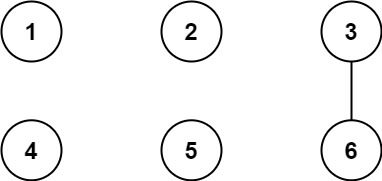
输入:n = 6, threshold = 2, queries = [[1,4],[2,5],[3,6]]
输出:[false,false,true]
解释:每个数的因数如下:
1:   1
2:   1, 2
3:   1, 3
4:   1, 2, 4
5:   1, 5
6:   1, 2, 3, 6
所有大于阈值的的因数已经加粗标识,只有城市 3 和 6 共享公约数 3 ,因此结果是:
[1,4]   1 与 4 不连通
[2,5]   2 与 5 不连通
[3,6]   3 与 6 连通,存在路径 3--6
示例 2:
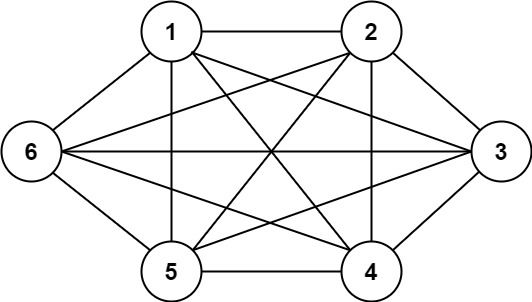
输入:n = 6, threshold = 0, queries = [[4,5],[3,4],[3,2],[2,6],[1,3]]
输出:[true,true,true,true,true]
解释:每个数的因数与上一个例子相同。但是,由于阈值为 0 ,所有的因数都大于阈值。因为所有的数字共享公因数 1 ,所以所有的城市都互相连通。
示例 3:
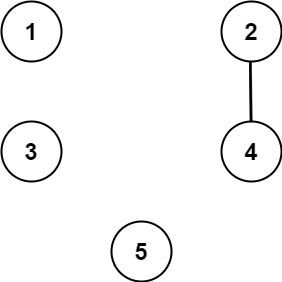
输入:n = 5, threshold = 1, queries = [[4,5],[4,5],[3,2],[2,3],[3,4]]
输出:[false,false,false,false,false]
解释:只有城市 2 和 4 共享的公约数 2 严格大于阈值 1 ,所以只有这两座城市是连通的。
注意,同一对节点 [x, y] 可以有多个查询,并且查询 [x,y] 等同于查询 [y,x] 。
提示:
2 <= n <= 1040 <= threshold <= n1 <= queries.length <= 105queries[i].length == 21 <= ai, bi <= citiesai != bi
解题思路
方法一:并查集
我们可以枚举 以及 的倍数,用并查集将它们连通起来。这样,对于每个查询 ,我们只需要判断 和 是否在同一个连通块中即可。
时间复杂度 ,空间复杂度 。其中 和 分别是节点数和查询数,而 是阿克曼函数的反函数。
class UnionFind:
    def __init__(self, n):
        self.p = list(range(n))
        self.size = [1] * n

    def find(self, x):
        if self.p[x] != x:
            self.p[x] = self.find(self.p[x])
        return self.p[x]

    def union(self, a, b):
        pa, pb = self.find(a), self.find(b)
        if pa == pb:
            return False
        if self.size[pa] > self.size[pb]:
            self.p[pb] = pa
            self.size[pa] += self.size[pb]
        else:
            self.p[pa] = pb
            self.size[pb] += self.size[pa]
        return True


class Solution:
    def areConnected(
        self, n: int, threshold: int, queries: List[List[int]]
    ) -> List[bool]:
        uf = UnionFind(n + 1)
        for a in range(threshold + 1, n + 1):
            for b in range(a + a, n + 1, a):
                uf.union(a, b)
        return [uf.find(a) == uf.find(b) for a, b in queries]
复杂度分析
| 指标 | 值 |
|---|---|
| 时间 | Depends on the final approach |
| 空间 | Depends on the final approach |
面试官常问的追问
外企场景- question_mark
Candidate should demonstrate understanding of divisor properties and efficient graph representation.
- question_mark
Look for clarity in explaining union-find data structure and its optimizations.
- question_mark
Assess candidate's ability to optimize by preprocessing divisors and minimizing redundant calculations.
常见陷阱
外企场景- error
Failure to preprocess divisors efficiently, leading to excessive computation for each query.
- error
Overcomplicating the solution with unnecessary data structures or algorithms.
- error
Not handling edge cases such as cities with no common divisors greater than the threshold.
进阶变体
外企场景- arrow_right_alt
Different thresholds or varying divisor conditions (e.g., prime numbers only).
- arrow_right_alt
Handling larger inputs with constraints on query counts and city numbers.
- arrow_right_alt
Optimizing for multiple threshold values in a single run to answer all queries efficiently.