

LeetCode 题解工作台
可以到达的最远建筑
给你一个整数数组 heights ,表示建筑物的高度。另有一些砖块 bricks 和梯子 ladders 。 你从建筑物 0 开始旅程,不断向后面的建筑物移动,期间可能会用到砖块或梯子。 当从建筑物 i 移动到建筑物 i+1 (下标 从 0 开始 )时: 如果当前建筑物的高度 大于或等于 下一建筑物…
3
题型
4
代码语言
3
相关题
当前训练重点
中等 · 贪心·invariant
答案摘要
梯子最好用在高度差较大的地方,因此我们可以将所有的高度差存入优先队列中,每次取出最小的高度差,如果梯子不够用,则用砖块填补,如果砖块不够用,则返回当前位置。 时间复杂度 $O(n\log n)$,空间复杂度 。其中 为数组 `heights` 的长度。


Interview AiBoxInterview AiBox 实时 AI 助手,陪你讲清 贪心·invariant 题型思路
题目描述
给你一个整数数组 heights ,表示建筑物的高度。另有一些砖块 bricks 和梯子 ladders 。
你从建筑物 0 开始旅程,不断向后面的建筑物移动,期间可能会用到砖块或梯子。
当从建筑物 i 移动到建筑物 i+1(下标 从 0 开始 )时:
- 如果当前建筑物的高度 大于或等于 下一建筑物的高度,则不需要梯子或砖块
- 如果当前建筑的高度 小于 下一个建筑的高度,您可以使用 一架梯子 或
(h[i+1] - h[i])个砖块
示例 1:
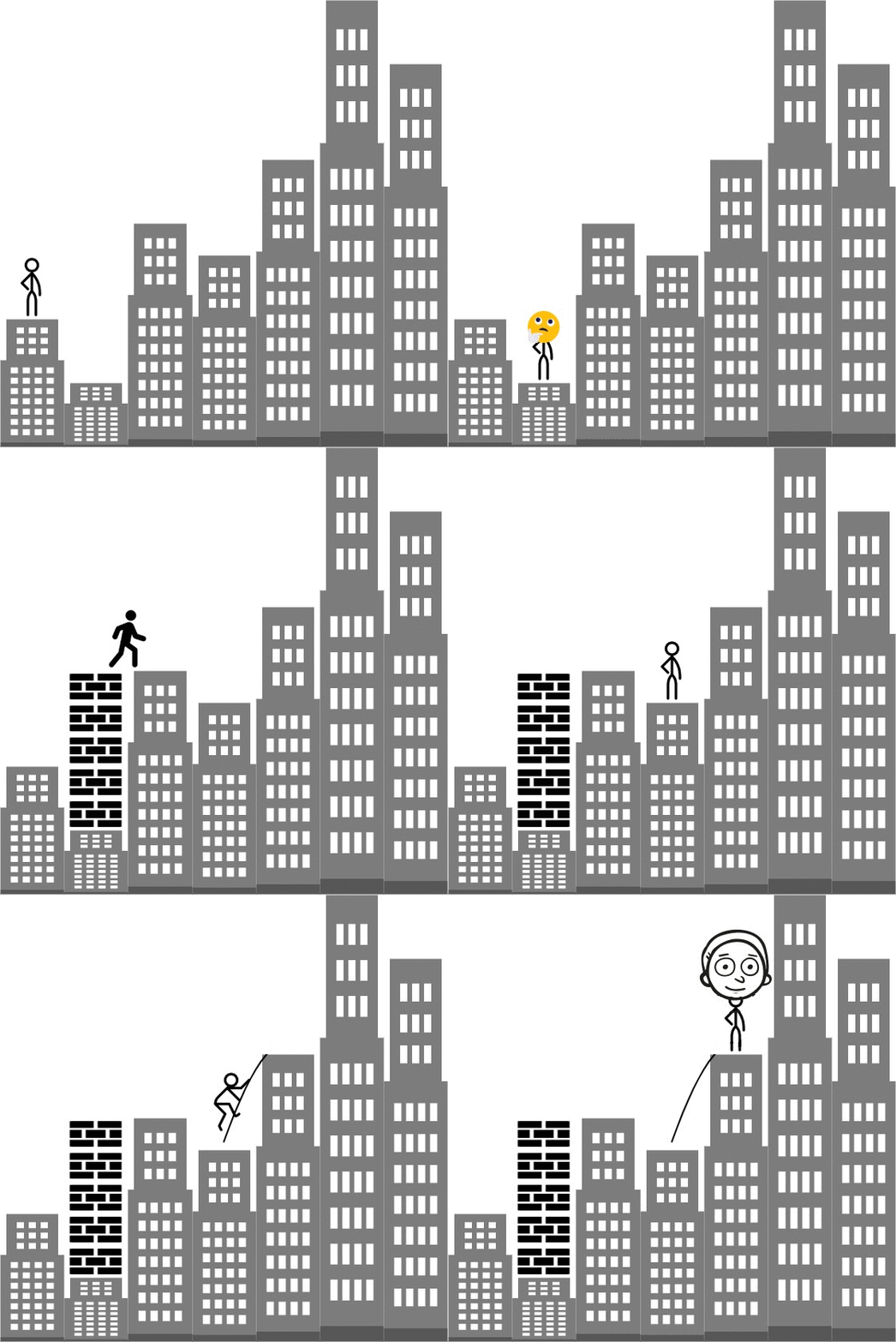
输入:heights = [4,2,7,6,9,14,12], bricks = 5, ladders = 1
输出:4
解释:从建筑物 0 出发,你可以按此方案完成旅程:
- 不使用砖块或梯子到达建筑物 1 ,因为 4 >= 2
- 使用 5 个砖块到达建筑物 2 。你必须使用砖块或梯子,因为 2 < 7
- 不使用砖块或梯子到达建筑物 3 ,因为 7 >= 6
- 使用唯一的梯子到达建筑物 4 。你必须使用砖块或梯子,因为 6 < 9
无法越过建筑物 4 ,因为没有更多砖块或梯子。
示例 2:
输入:heights = [4,12,2,7,3,18,20,3,19], bricks = 10, ladders = 2
输出:7
示例 3:
输入:heights = [14,3,19,3], bricks = 17, ladders = 0
输出:3
提示:
1 <= heights.length <= 1051 <= heights[i] <= 1060 <= bricks <= 1090 <= ladders <= heights.length
解题思路
方法一:贪心 + 优先队列(小根堆)
梯子最好用在高度差较大的地方,因此我们可以将所有的高度差存入优先队列中,每次取出最小的高度差,如果梯子不够用,则用砖块填补,如果砖块不够用,则返回当前位置。
时间复杂度 ,空间复杂度 。其中 为数组 heights 的长度。
class Solution:
    def furthestBuilding(self, heights: List[int], bricks: int, ladders: int) -> int:
        h = []
        for i, a in enumerate(heights[:-1]):
            b = heights[i + 1]
            d = b - a
            if d > 0:
                heappush(h, d)
                if len(h) > ladders:
                    bricks -= heappop(h)
                    if bricks < 0:
                        return i
        return len(heights) - 1
复杂度分析
| 指标 | 值 |
|---|---|
| 时间 | Depends on the final approach |
| 空间 | Depends on the final approach |
面试官常问的追问
外企场景- question_mark
Check for the candidate's understanding of greedy algorithms and resource optimization.
- question_mark
Ensure they are comfortable with heap operations and how it helps in managing resources efficiently.
- question_mark
Evaluate if they can handle edge cases effectively, such as when there are no bricks or ladders.
常见陷阱
外企场景- error
Forgetting to use the heap to track and optimize the largest height differences when resources are exhausted.
- error
Failing to correctly prioritize ladders over bricks for larger height gaps.
- error
Mismanaging edge cases where no resources are available or all buildings are reachable with limited resources.
进阶变体
外企场景- arrow_right_alt
What if there were multiple ladders or bricks at specific intervals?
- arrow_right_alt
Can the problem be solved with a more straightforward dynamic programming approach?
- arrow_right_alt
What if the heights array is reversed, would the solution change?