

LeetCode 题解工作台
最大节点价值之和
给你一棵 n 个节点的 无向 树,节点从 0 到 n - 1 编号。树以长度为 n - 1 下标从 0 开始的二维整数数组 edges 的形式给你,其中 edges[i] = [u i , v i ] 表示树中节点 u i 和 v i 之间有一条边。同时给你一个 正 整数 k 和一个长度为 n 下标…
6
题型
7
代码语言
3
相关题
当前训练重点
困难 · 二分·树·traversal
答案摘要
对于任意一个数 ,与 异或偶数次后,值不变。所以,对于一棵树的任意一条路径,我们将路径上所有的边都进行操作,那么该路径上除了起点和终点外,其他节点的值都不会改变。 另外,无论进行了多少次操作,总会有偶数个元素异或了 ,其余元素不变。


Interview AiBoxInterview AiBox 实时 AI 助手,陪你讲清 二分·树·traversal 题型思路
题目描述
给你一棵 n 个节点的 无向 树,节点从 0 到 n - 1 编号。树以长度为 n - 1 下标从 0 开始的二维整数数组 edges 的形式给你,其中 edges[i] = [ui, vi] 表示树中节点 ui 和 vi 之间有一条边。同时给你一个 正 整数 k 和一个长度为 n 下标从 0 开始的 非负 整数数组 nums ,其中 nums[i] 表示节点 i 的 价值 。
Alice 想 最大化 树中所有节点价值之和。为了实现这一目标,Alice 可以执行以下操作 任意 次(包括 0 次):
- 选择连接节点
u和v的边[u, v],并将它们的值更新为:nums[u] = nums[u] XOR knums[v] = nums[v] XOR k
请你返回 Alice 通过执行以上操作 任意次 后,可以得到所有节点 价值之和 的 最大值 。
示例 1:
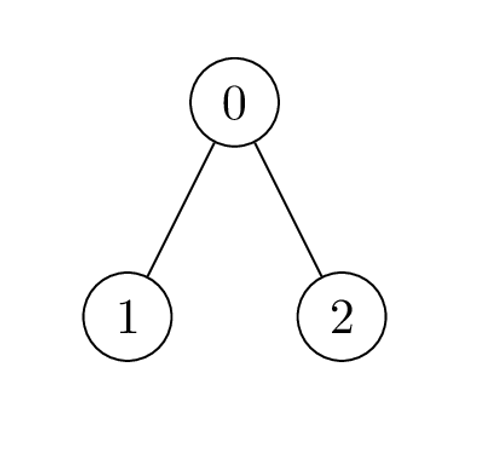
输入:nums = [1,2,1], k = 3, edges = [[0,1],[0,2]]
输出:6
解释:Alice 可以通过一次操作得到最大价值和 6 :
- 选择边 [0,2] 。nums[0] 和 nums[2] 都变为:1 XOR 3 = 2 ,数组 nums 变为:[1,2,1] -> [2,2,2] 。
所有节点价值之和为 2 + 2 + 2 = 6 。
6 是可以得到最大的价值之和。
示例 2:
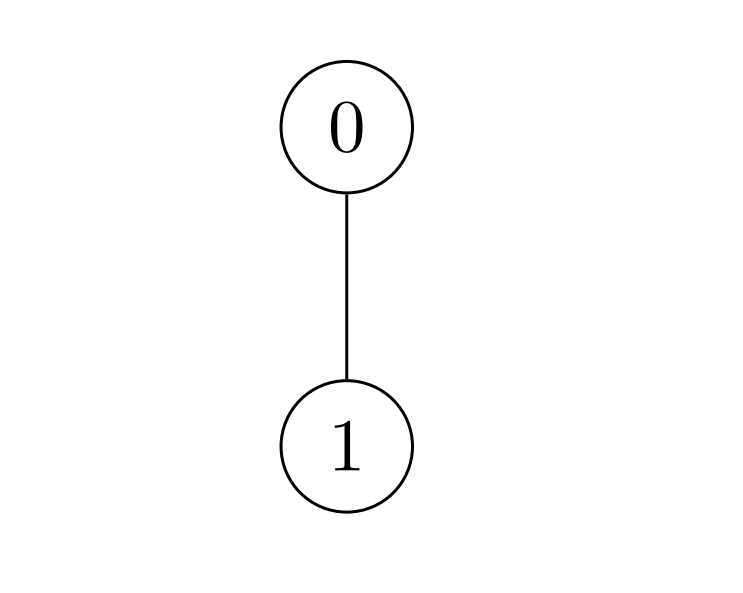
输入:nums = [2,3], k = 7, edges = [[0,1]]
输出:9
解释:Alice 可以通过一次操作得到最大和 9 :
- 选择边 [0,1] 。nums[0] 变为:2 XOR 7 = 5 ,nums[1] 变为:3 XOR 7 = 4 ,数组 nums 变为:[2,3] -> [5,4] 。
所有节点价值之和为 5 + 4 = 9 。
9 是可以得到最大的价值之和。
示例 3:

输入:nums = [7,7,7,7,7,7], k = 3, edges = [[0,1],[0,2],[0,3],[0,4],[0,5]]
输出:42
解释:Alice 不需要执行任何操作,就可以得到最大价值之和 42 。
提示:
2 <= n == nums.length <= 2 * 1041 <= k <= 1090 <= nums[i] <= 109edges.length == n - 1edges[i].length == 20 <= edges[i][0], edges[i][1] <= n - 1- 输入保证
edges构成一棵合法的树。
解题思路
方法一:动态规划
对于任意一个数 ,与 异或偶数次后,值不变。所以,对于一棵树的任意一条路径,我们将路径上所有的边都进行操作,那么该路径上除了起点和终点外,其他节点的值都不会改变。
另外,无论进行了多少次操作,总会有偶数个元素异或了 ,其余元素不变。
因此,问题转化为:对于数组 ,任选其中偶数个元素异或 ,使得和最大。
我们可以使用动态规划解决这个问题。设 表示当前有偶数个元素异或了 时的最大和,而 表示当前有奇数个元素异或了 时的最大和。那么状态转移方程为:
其中 表示当前元素的值。
我们遍历数组 ,根据上述状态转移方程更新 和 ,最后返回 即可。
时间复杂度 ,其中 为数组 的长度。空间复杂度 。
class Solution:
    def maximumValueSum(self, nums: List[int], k: int, edges: List[List[int]]) -> int:
        f0, f1 = 0, -inf
        for x in nums:
            f0, f1 = max(f0 + x, f1 + (x ^ k)), max(f1 + x, f0 + (x ^ k))
        return f0
复杂度分析
| 指标 | 值 |
|---|---|
| 时间 | O(n) |
| 空间 | O(1) |
面试官常问的追问
外企场景- question_mark
They want you to notice that edge operations do not require tree DP over children; the tree only enforces even toggle parity.
- question_mark
A strong solution quickly rewrites the problem from modifying edges to selecting node-wise XOR gains under an even-count constraint.
- question_mark
If you mention rooting the tree, the useful conclusion is feasibility of any even-sized toggled set, not a full binary-tree recurrence.
常见陷阱
外企场景- error
Greedily taking every node where nums[i] XOR k is larger than nums[i] without checking whether that chosen count is odd.
- error
Building a full traversal-based DP on the tree and overcomplicating a problem whose final state depends only on parity of toggled nodes.
- error
Assuming the exact edge sequence matters for the maximum sum, when only the reachable even-cardinality set of changed nodes matters.
进阶变体
外企场景- arrow_right_alt
Return the actual set of nodes to toggle instead of only the maximum sum, which requires reconstructing the parity choice.
- arrow_right_alt
Replace the tree with a general connected graph; the same even-parity reachability idea still drives the optimization.
- arrow_right_alt
Ask for the maximum sum after exactly m operations, which changes the simple parity view into a tighter operation-count constraint.