

LeetCode 题解工作台
逃离火灾
给你一个下标从 0 开始大小为 m x n 的二维整数数组 grid ,它表示一个网格图。每个格子为下面 3 个值之一: 0 表示草地。 1 表示着火的格子。 2 表示一座墙,你跟火都不能通过这个格子。 一开始你在最左上角的格子 (0, 0) ,你想要到达最右下角的安全屋格子 (m - 1, n -…
4
题型
5
代码语言
3
相关题
当前训练重点
困难 · 二分·搜索·答案·空间
答案摘要
我们注意到,如果一个停留时间 满足条件,那么所有小于 的时间也都满足条件。因此我们可以考虑使用二分查找的方法找到最大的满足条件的时间。 我们定义二分查找的左边界 ,右边界 $r = m \times n$。每一次二分查找,我们都将 和 的中点 作为当前的停留时间,判断是否满足条件。如果满足条件,那么我们将 更新为 ,否则我们将 更新为 。最后,如果 $l = m \times n$,…


Interview AiBoxInterview AiBox 实时 AI 助手,陪你讲清 二分·搜索·答案·空间 题型思路
题目描述
给你一个下标从 0 开始大小为 m x n 的二维整数数组 grid ,它表示一个网格图。每个格子为下面 3 个值之一:
0表示草地。1表示着火的格子。2表示一座墙,你跟火都不能通过这个格子。
一开始你在最左上角的格子 (0, 0) ,你想要到达最右下角的安全屋格子 (m - 1, n - 1) 。每一分钟,你可以移动到 相邻 的草地格子。每次你移动 之后 ,着火的格子会扩散到所有不是墙的 相邻 格子。
请你返回你在初始位置可以停留的 最多 分钟数,且停留完这段时间后你还能安全到达安全屋。如果无法实现,请你返回 -1 。如果不管你在初始位置停留多久,你 总是 能到达安全屋,请你返回 109 。
注意,如果你到达安全屋后,火马上到了安全屋,这视为你能够安全到达安全屋。
如果两个格子有共同边,那么它们为 相邻 格子。
示例 1:
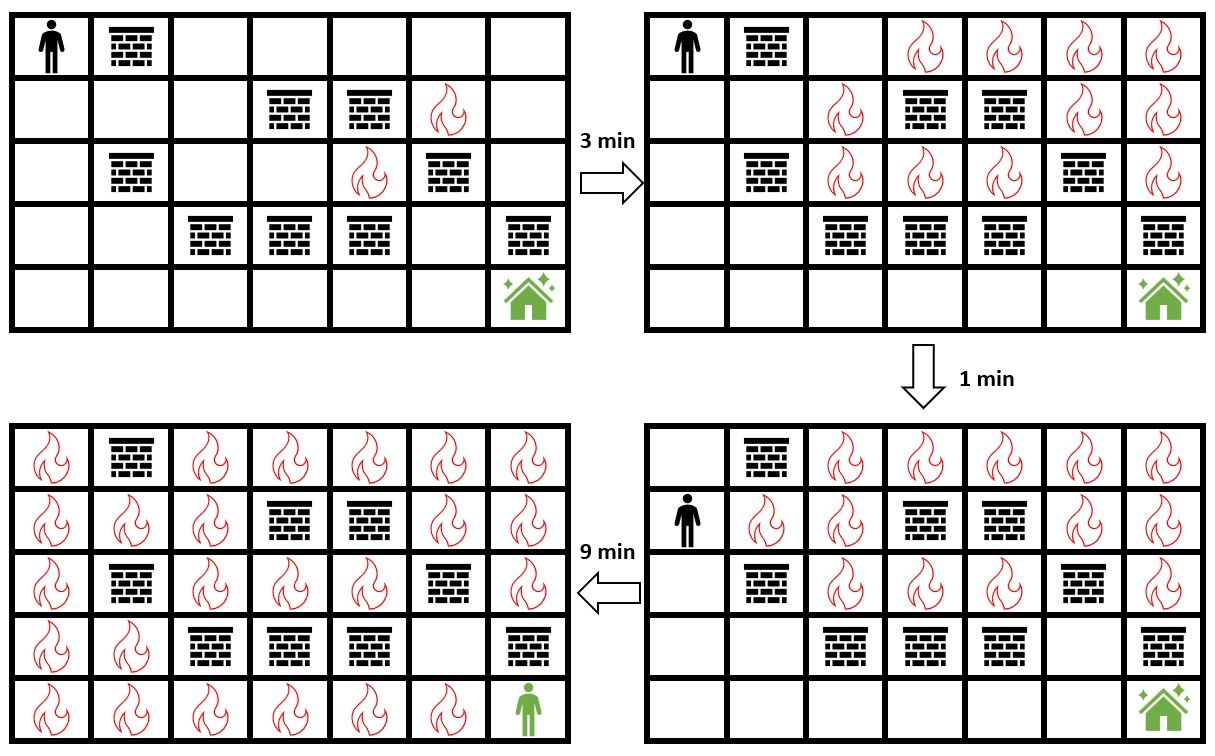
输入:grid = [[0,2,0,0,0,0,0],[0,0,0,2,2,1,0],[0,2,0,0,1,2,0],[0,0,2,2,2,0,2],[0,0,0,0,0,0,0]]
输出:3
解释:上图展示了你在初始位置停留 3 分钟后的情形。
你仍然可以安全到达安全屋。
停留超过 3 分钟会让你无法安全到达安全屋。
示例 2:
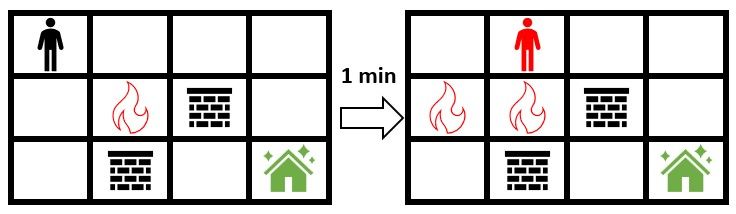
输入:grid = [[0,0,0,0],[0,1,2,0],[0,2,0,0]]
输出:-1
解释:上图展示了你马上开始朝安全屋移动的情形。
火会蔓延到你可以移动的所有格子,所以无法安全到达安全屋。
所以返回 -1 。
示例 3:
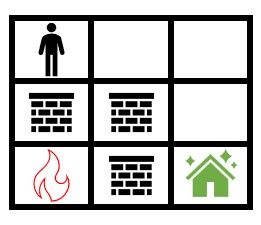
输入:grid = [[0,0,0],[2,2,0],[1,2,0]]
输出:1000000000
解释:上图展示了初始网格图。
注意,由于火被墙围了起来,所以无论如何你都能安全到达安全屋。
所以返回 109 。
提示:
m == grid.lengthn == grid[i].length2 <= m, n <= 3004 <= m * n <= 2 * 104grid[i][j]是0,1或者2。grid[0][0] == grid[m - 1][n - 1] == 0
解题思路
方法一:二分查找 + BFS
我们注意到,如果一个停留时间 满足条件,那么所有小于 的时间也都满足条件。因此我们可以考虑使用二分查找的方法找到最大的满足条件的时间。
我们定义二分查找的左边界 ,右边界 。每一次二分查找,我们都将 和 的中点 作为当前的停留时间,判断是否满足条件。如果满足条件,那么我们将 更新为 ,否则我们将 更新为 。最后,如果 ,那么说明不存在满足条件的停留时间,我们返回 ,否则我们返回 。
问题的关键转化为如何判断一个停留时间 是否满足条件。我们可以使用广度优先搜索的方法,在 时间内,模拟火的蔓延过程。如果停留 时间后,火蔓延到了起点位置,那么说明不满足条件,提前返回。否则,我们这时候再使用广度优先搜索,每一次从当前位置向四个方向进行搜索,每一轮结束后,我们还需要将火向四个方向蔓延一次。如果在这个过程中,我们找到了一条从起点到终点的路径,那么说明满足条件。
时间复杂度 ,空间复杂度 。其中 和 分别为网格的行数和列数。
class Solution:
    def maximumMinutes(self, grid: List[List[int]]) -> int:
        def spread(q: Deque[int]) -> Deque[int]:
            nq = deque()
            while q:
                i, j = q.popleft()
                for a, b in pairwise(dirs):
                    x, y = i + a, j + b
                    if 0 <= x < m and 0 <= y < n and not fire[x][y] and grid[x][y] == 0:
                        fire[x][y] = True
                        nq.append((x, y))
            return nq

        def check(t: int) -> bool:
            for i in range(m):
                for j in range(n):
                    fire[i][j] = False
            q1 = deque()
            for i, row in enumerate(grid):
                for j, x in enumerate(row):
                    if x == 1:
                        fire[i][j] = True
                        q1.append((i, j))
            while t and q1:
                q1 = spread(q1)
                t -= 1
            if fire[0][0]:
                return False
            q2 = deque([(0, 0)])
            vis = [[False] * n for _ in range(m)]
            vis[0][0] = True
            while q2:
                for _ in range(len(q2)):
                    i, j = q2.popleft()
                    if fire[i][j]:
                        continue
                    for a, b in pairwise(dirs):
                        x, y = i + a, j + b
                        if (
                            0 <= x < m
                            and 0 <= y < n
                            and not vis[x][y]
                            and not fire[x][y]
                            and grid[x][y] == 0
                        ):
                            if x == m - 1 and y == n - 1:
                                return True
                            vis[x][y] = True
                            q2.append((x, y))
                q1 = spread(q1)
            return False

        m, n = len(grid), len(grid[0])
        l, r = -1, m * n
        dirs = (-1, 0, 1, 0, -1)
        fire = [[False] * n for _ in range(m)]
        while l < r:
            mid = (l + r + 1) >> 1
            if check(mid):
                l = mid
            else:
                r = mid - 1
        return int(1e9) if l == m * n else l
复杂度分析
| 指标 | 值 |
|---|---|
| 时间 | Depends on the final approach |
| 空间 | Depends on the final approach |
面试官常问的追问
外企场景- question_mark
Look for a candidate who can handle the combination of binary search and BFS effectively.
- question_mark
Assess if the candidate understands how fire spread impacts pathfinding and timing.
- question_mark
Evaluate the candidate's approach to handling large grids and efficient time management.
常见陷阱
外企场景- error
Misunderstanding how fire spreads and when it reaches each cell, leading to incorrect time estimations.
- error
Failing to account for edge cases where the fire immediately blocks the path to the safehouse.
- error
Not optimizing the solution with binary search, leading to unnecessary time complexity.
进阶变体
外企场景- arrow_right_alt
Consider grids with more complex fire spread patterns, including diagonal spreads or multiple fire sources.
- arrow_right_alt
Change the problem’s constraints to allow multiple safehouses and examine how that impacts the solution.
- arrow_right_alt
Alter the fire spread rules, such as allowing the fire to spread slower or faster, and analyze the effect on the algorithm.