

LeetCode 题解工作台
最大价值和与最小价值和的差值
给你一个 n 个节点的无向无根图,节点编号为 0 到 n - 1 。给你一个整数 n 和一个长度为 n - 1 的二维整数数组 edges ,其中 edges[i] = [a i , b i ] 表示树中节点 a i 和 b i 之间有一条边。 每个节点都有一个价值。给你一个整数数组 price ,…
4
题型
4
代码语言
3
相关题
当前训练重点
困难 · 二分·树·traversal
答案摘要
由于每个节点价值均为正整数,因此,以节点 作为根节点的最小的一条路径就是 节点本身,那么价值和最大的一条路径与最小的一条路径的差值就等价于去掉路径的一个端点。 我们设计一个函数 $dfs(i, fa)$,表示以节点 为根节点的子树中,不去掉端点的最大路径和以及去掉端点的最大路径和。其中, 表示节点 的父节点。


Interview AiBoxInterview AiBox 实时 AI 助手,陪你讲清 二分·树·traversal 题型思路
题目描述
给你一个 n 个节点的无向无根图,节点编号为 0 到 n - 1 。给你一个整数 n 和一个长度为 n - 1 的二维整数数组 edges ,其中 edges[i] = [ai, bi] 表示树中节点 ai 和 bi 之间有一条边。
每个节点都有一个价值。给你一个整数数组 price ,其中 price[i] 是第 i 个节点的价值。
一条路径的 价值和 是这条路径上所有节点的价值之和。
你可以选择树中任意一个节点作为根节点 root 。选择 root 为根的 开销 是以 root 为起点的所有路径中,价值和 最大的一条路径与最小的一条路径的差值。
请你返回所有节点作为根节点的选择中,最大 的 开销 为多少。
示例 1:
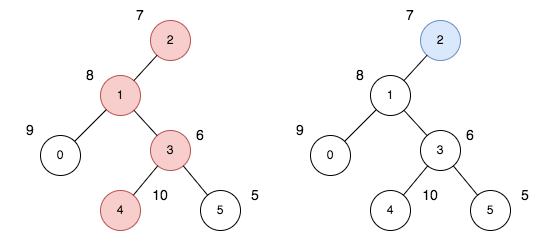
输入:n = 6, edges = [[0,1],[1,2],[1,3],[3,4],[3,5]], price = [9,8,7,6,10,5]
输出:24
解释:上图展示了以节点 2 为根的树。左图(红色的节点)是最大价值和路径,右图(蓝色的节点)是最小价值和路径。
- 第一条路径节点为 [2,1,3,4]:价值为 [7,8,6,10] ,价值和为 31 。
- 第二条路径节点为 [2] ,价值为 [7] 。
最大路径和与最小路径和的差值为 24 。24 是所有方案中的最大开销。
示例 2:
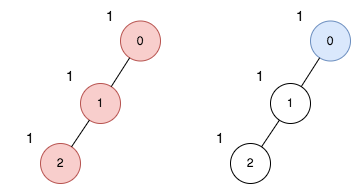
输入:n = 3, edges = [[0,1],[1,2]], price = [1,1,1]
输出:2
解释:上图展示了以节点 0 为根的树。左图(红色的节点)是最大价值和路径,右图(蓝色的节点)是最小价值和路径。
- 第一条路径包含节点 [0,1,2]:价值为 [1,1,1] ,价值和为 3 。
- 第二条路径节点为 [0] ,价值为 [1] 。
最大路径和与最小路径和的差值为 2 。2 是所有方案中的最大开销。
提示:
1 <= n <= 105edges.length == n - 10 <= ai, bi <= n - 1edges表示一棵符合题面要求的树。price.length == n1 <= price[i] <= 105
解题思路
方法一:树形 DP
由于每个节点价值均为正整数,因此,以节点 作为根节点的最小的一条路径就是 节点本身,那么价值和最大的一条路径与最小的一条路径的差值就等价于去掉路径的一个端点。
我们设计一个函数 ,表示以节点 为根节点的子树中,不去掉端点的最大路径和以及去掉端点的最大路径和。其中, 表示节点 的父节点。
函数 的实现逻辑如下:
初始化 , ,表示初始只有一个节点,不去掉端点的最大路径和为 ,去掉端点的最大路径和为 。
对于节点 的每个子节点 ,如果 ,则递归调用函数 ,这里返回了以节点 为根节点的子树中,不去掉端点的最大路径和以及去掉端点的最大路径和,记为 和 。此时答案有两种情况:
- 前面不去掉端点的最大路径和加上当前节点去掉端点的最大路径和,即 ;
- 前面去掉端点的最大路径和加上当前节点不去掉端点的最大路径和,即 。
我们更新答案的最大值,即 。
然后更新 和 ,即 , ,最后返回。
时间复杂度为 ,空间复杂度为 。其中 为节点个数。
class Solution:
    def maxOutput(self, n: int, edges: List[List[int]], price: List[int]) -> int:
        def dfs(i, fa):
            a, b = price[i], 0
            for j in g[i]:
                if j != fa:
                    c, d = dfs(j, i)
                    nonlocal ans
                    ans = max(ans, a + d, b + c)
                    a = max(a, price[i] + c)
                    b = max(b, price[i] + d)
            return a, b

        g = defaultdict(list)
        for a, b in edges:
            g[a].append(b)
            g[b].append(a)
        ans = 0
        dfs(0, -1)
        return ans
复杂度分析
| 指标 | 值 |
|---|---|
| 时间 | complexity is O(n) due to a single DFS traversal through all nodes. Space complexity is O(n) for storing subtree states and recursion stack, which scales with the tree size. |
| 空间 | Depends on the final approach |
面试官常问的追问
外企场景- question_mark
Expect efficient handling of trees with up to 10^5 nodes, highlighting binary-tree traversal mastery.
- question_mark
Demonstrate understanding of state tracking and dynamic programming across tree edges.
- question_mark
Recognize that the minimum price sum is always a single node, which guides optimal traversal.
常见陷阱
外企场景- error
Forgetting to consider single-node paths as minimum sum, leading to incorrect difference.
- error
Recomputing path sums for overlapping subtrees instead of tracking state, causing inefficiency.
- error
Incorrectly summing path prices without maintaining subtree maximums, missing the global maximum difference.
进阶变体
外企场景- arrow_right_alt
Compute difference between maximum and minimum weighted path sums with additional edge costs.
- arrow_right_alt
Extend the problem to handle multiple disconnected trees (forest) and report maximum differences per tree.
- arrow_right_alt
Modify node prices dynamically and recalculate the maximum difference efficiently for online queries.