

LeetCode 题解工作台
设计有序流
有 n 个 (id, value) 对,其中 id 是 1 到 n 之间的一个整数, value 是一个字符串。不存在 id 相同的两个 (id, value) 对。 设计一个流,以 任意 顺序获取 n 个 (id, value) 对,并在多次调用时 按 id 递增的顺序 返回一些值。 实现 Ord…
4
题型
6
代码语言
3
相关题
当前训练重点
简单 · 数组·哈希·扫描
答案摘要
我们可以使用一个长度为 $n + 1$ 的数组 来模拟这个流,其中 表示 $\textit{id} = i$ 的值。同时,我们使用一个指针 来表示当前的位置。初始时 $\textit{ptr} = 1$。 在插入一个新的 $(\textit{idKey}, \textit{value})$ 对时,我们将 更新为 。然后,我们从 开始,依次将 加入答案中,直到 为空。


Interview AiBoxInterview AiBox 实时 AI 助手,陪你讲清 数组·哈希·扫描 题型思路
题目描述
有 n 个 (id, value) 对,其中 id 是 1 到 n 之间的一个整数,value 是一个字符串。不存在 id 相同的两个 (id, value) 对。
设计一个流,以 任意 顺序获取 n 个 (id, value) 对,并在多次调用时 按 id 递增的顺序 返回一些值。
实现 OrderedStream 类:
OrderedStream(int n)构造一个能接收n个值的流,并将当前指针ptr设为1。String[] insert(int id, String value)向流中存储新的(id, value)对。存储后:- 如果流存储有
id = ptr的(id, value)对,则找出从id = ptr开始的 最长 id 连续递增序列 ,并 按顺序 返回与这些 id 关联的值的列表。然后,将ptr更新为最后那个id + 1。 -
否则,返回一个空列表。
- 如果流存储有
示例:
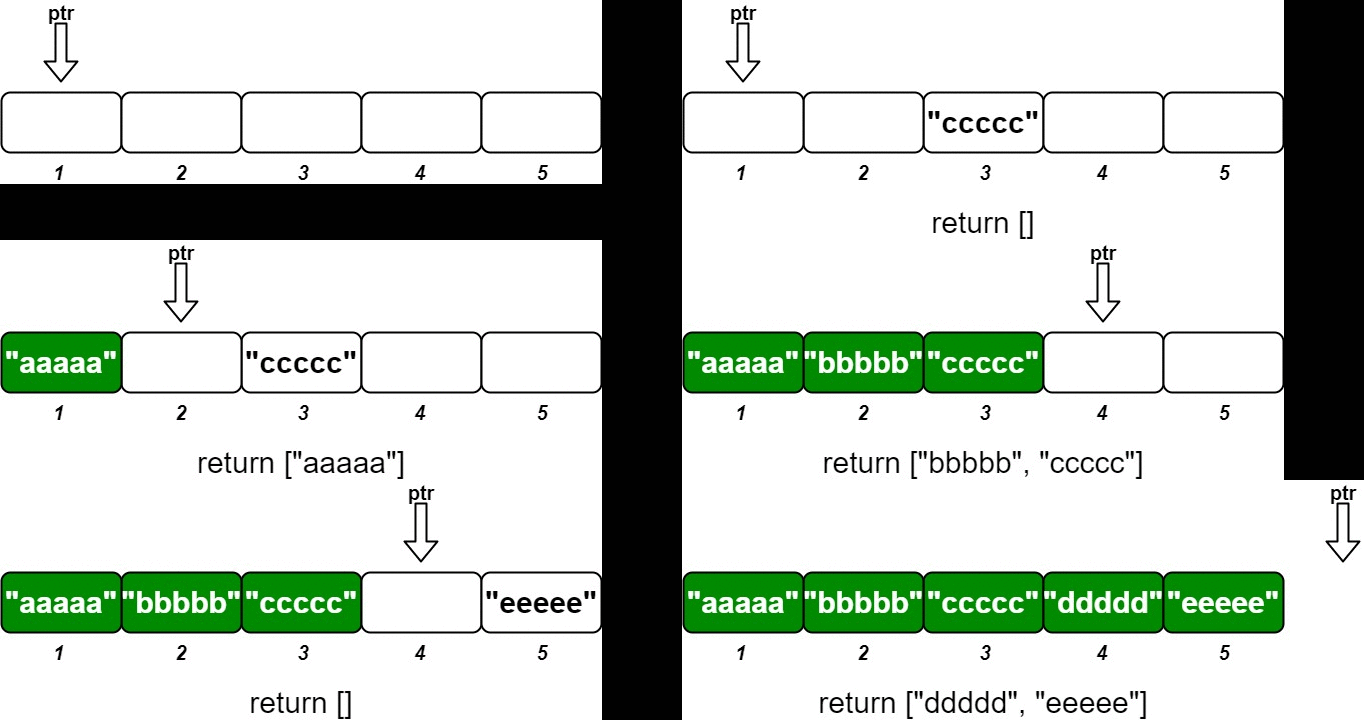
输入
["OrderedStream", "insert", "insert", "insert", "insert", "insert"]
[[5], [3, "ccccc"], [1, "aaaaa"], [2, "bbbbb"], [5, "eeeee"], [4, "ddddd"]]
输出
[null, [], ["aaaaa"], ["bbbbb", "ccccc"], [], ["ddddd", "eeeee"]]

解释
OrderedStream os= new OrderedStream(5);
os.insert(3, "ccccc"); // 插入 (3, "ccccc"),返回 []
os.insert(1, "aaaaa"); // 插入 (1, "aaaaa"),返回 ["aaaaa"]
os.insert(2, "bbbbb"); // 插入 (2, "bbbbb"),返回 ["bbbbb", "ccccc"]
os.insert(5, "eeeee"); // 插入 (5, "eeeee"),返回 []
os.insert(4, "ddddd"); // 插入 (4, "ddddd"),返回 ["ddddd", "eeeee"]
提示:
1 <= n <= 10001 <= id <= nvalue.length == 5value仅由小写字母组成- 每次调用
insert都会使用一个唯一的id - 恰好调用
n次insert
解题思路
方法一:数组模拟
我们可以使用一个长度为 的数组 来模拟这个流,其中 表示 的值。同时,我们使用一个指针 来表示当前的位置。初始时 。
在插入一个新的 对时,我们将 更新为 。然后,我们从 开始,依次将 加入答案中,直到 为空。
时间复杂度 ,空间复杂度 。其中 为数据流的长度。
class OrderedStream:

    def __init__(self, n: int):
        self.ptr = 1
        self.data = [None] * (n + 1)

    def insert(self, idKey: int, value: str) -> List[str]:
        self.data[idKey] = value
        ans = []
        while self.ptr < len(self.data) and self.data[self.ptr]:
            ans.append(self.data[self.ptr])
            self.ptr += 1
        return ans


# Your OrderedStream object will be instantiated and called as such:
# obj = OrderedStream(n)
# param_1 = obj.insert(idKey,value)
复杂度分析
| 指标 | 值 |
|---|---|
| 时间 | Depends on the final approach |
| 空间 | Depends on the final approach |
面试官常问的追问
外企场景- question_mark
Candidates should demonstrate an understanding of managing ordered data streams efficiently.
- question_mark
Expect familiarity with data structures like arrays or hash maps for optimal performance.
- question_mark
Look for solutions that efficiently handle insertions and output without unnecessary sorting.
常见陷阱
外企场景- error
Failure to track the next expected ID, leading to incorrect chunk retrieval.
- error
Inefficiently sorting or scanning the stream with every insertion, which can be avoided by using direct access structures.
- error
Not handling gaps in the stream correctly, leading to skipped values or incorrect output.
进阶变体
外企场景- arrow_right_alt
What if the stream were designed to return sorted values by a different key (e.g., value rather than id)?
- arrow_right_alt
How would the solution change if we had multiple concurrent streams with interleaved insertions?
- arrow_right_alt
What if the stream had to handle updates or deletions to values after insertion?