

LeetCode 题解工作台
统计可以提取的工件
存在一个 n x n 大小、下标从 0 开始的网格,网格中埋着一些工件。给你一个整数 n 和一个下标从 0 开始的二维整数数组 artifacts , artifacts 描述了矩形工件的位置,其中 artifacts[i] = [r1 i , c1 i , r2 i , c2 i ] 表示第 i …
3
题型
6
代码语言
3
相关题
当前训练重点
中等 · 数组·哈希·扫描
答案摘要
我们可以用哈希表 记录所有挖掘的单元格,然后遍历所有工件,判断工件的所有部分是否都在哈希表中,若是则可以提取该工件,答案加一。 时间复杂度 $O(m + k)$,空间复杂度 ,其中 是工件的数量,而 是挖掘的单元格的数量。


Interview AiBoxInterview AiBox 实时 AI 助手,陪你讲清 数组·哈希·扫描 题型思路
题目描述
存在一个 n x n 大小、下标从 0 开始的网格,网格中埋着一些工件。给你一个整数 n 和一个下标从 0 开始的二维整数数组 artifacts ,artifacts 描述了矩形工件的位置,其中 artifacts[i] = [r1i, c1i, r2i, c2i] 表示第 i 个工件在子网格中的填埋情况:
(r1i, c1i)是第i个工件 左上 单元格的坐标,且(r2i, c2i)是第i个工件 右下 单元格的坐标。
你将会挖掘网格中的一些单元格,并清除其中的填埋物。如果单元格中埋着工件的一部分,那么该工件这一部分将会裸露出来。如果一个工件的所有部分都都裸露出来,你就可以提取该工件。
给你一个下标从 0 开始的二维整数数组 dig ,其中 dig[i] = [ri, ci] 表示你将会挖掘单元格 (ri, ci) ,返回你可以提取的工件数目。
生成的测试用例满足:
- 不存在重叠的两个工件。
- 每个工件最多只覆盖
4个单元格。 dig中的元素互不相同。
示例 1:
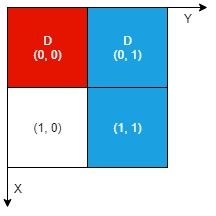
输入:n = 2, artifacts = [[0,0,0,0],[0,1,1,1]], dig = [[0,0],[0,1]]
输出:1
解释:
不同颜色表示不同的工件。挖掘的单元格用 'D' 在网格中进行标记。
有 1 个工件可以提取,即红色工件。
蓝色工件在单元格 (1,1) 的部分尚未裸露出来,所以无法提取该工件。
因此,返回 1 。
示例 2:
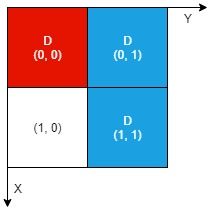
输入:n = 2, artifacts = [[0,0,0,0],[0,1,1,1]], dig = [[0,0],[0,1],[1,1]]
输出:2
解释:红色工件和蓝色工件的所有部分都裸露出来(用 'D' 标记),都可以提取。因此,返回 2 。
提示:
1 <= n <= 10001 <= artifacts.length, dig.length <= min(n2, 105)artifacts[i].length == 4dig[i].length == 20 <= r1i, c1i, r2i, c2i, ri, ci <= n - 1r1i <= r2ic1i <= c2i- 不存在重叠的两个工件
- 每个工件 最多 只覆盖
4个单元格 dig中的元素互不相同
解题思路
方法一:哈希表
我们可以用哈希表 记录所有挖掘的单元格,然后遍历所有工件,判断工件的所有部分是否都在哈希表中,若是则可以提取该工件,答案加一。
时间复杂度 ,空间复杂度 ,其中 是工件的数量,而 是挖掘的单元格的数量。
class Solution:
    def digArtifacts(
        self, n: int, artifacts: List[List[int]], dig: List[List[int]]
    ) -> int:
        def check(a: List[int]) -> bool:
            x1, y1, x2, y2 = a
            return all(
                (x, y) in s for x in range(x1, x2 + 1) for y in range(y1, y2 + 1)
            )

        s = {(i, j) for i, j in dig}
        return sum(check(a) for a in artifacts)
复杂度分析
| 指标 | 值 |
|---|---|
| 时间 | Depends on the final approach |
| 空间 | Depends on the final approach |
面试官常问的追问
外企场景- question_mark
Can the candidate implement a solution that handles large grids efficiently?
- question_mark
Is the candidate able to use a hash table for constant time lookups?
- question_mark
Does the candidate handle edge cases, such as no artifacts or all artifacts being extractable?
常见陷阱
外企场景- error
Using inefficient search methods for checking excavations, such as iterating over the entire dig array multiple times.
- error
Failing to account for the scenario where artifacts are partially uncovered and cannot be extracted.
- error
Not optimizing the solution to handle large grids and a high number of excavation operations.
进阶变体
外企场景- arrow_right_alt
What if the grid size increases significantly?
- arrow_right_alt
How would the problem change if artifacts can overlap?
- arrow_right_alt
Can this approach be adapted for a 3D grid?