

LeetCode 题解工作台
二叉搜索树迭代器
实现一个二叉搜索树迭代器类 BSTIterator ,表示一个按中序遍历二叉搜索树(BST)的迭代器: BSTIterator(TreeNode root) 初始化 BSTIterator 类的一个对象。BST 的根节点 root 会作为构造函数的一部分给出。指针应初始化为一个不存在于 BST 中的…
6
题型
7
代码语言
3
相关题
当前训练重点
中等 · 二分·树·traversal
答案摘要
初始化数据时,递归中序遍历,将二叉搜索树每个结点的值保存在列表 `vals` 中。用 `cur` 指针记录外部即将遍历的位置,初始化为 0。 调用 `next()` 时,返回 `vals[cur]`,同时 `cur` 指针自增。调用 `hasNext()` 时,判断 `cur` 指针是否已经达到 `len(vals)` 个数,若是,说明已经遍历结束,返回 false,否则返回 true。


Interview AiBoxInterview AiBox 实时 AI 助手,陪你讲清 二分·树·traversal 题型思路
题目描述
BSTIterator ,表示一个按中序遍历二叉搜索树(BST)的迭代器:
BSTIterator(TreeNode root)初始化BSTIterator类的一个对象。BST 的根节点root会作为构造函数的一部分给出。指针应初始化为一个不存在于 BST 中的数字,且该数字小于 BST 中的任何元素。boolean hasNext()如果向指针右侧遍历存在数字,则返回true;否则返回false。int next()将指针向右移动,然后返回指针处的数字。
注意,指针初始化为一个不存在于 BST 中的数字,所以对 next() 的首次调用将返回 BST 中的最小元素。
你可以假设 next() 调用总是有效的,也就是说,当调用 next() 时,BST 的中序遍历中至少存在一个下一个数字。
示例:
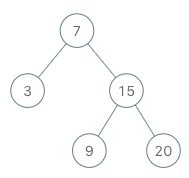
输入
["BSTIterator", "next", "next", "hasNext", "next", "hasNext", "next", "hasNext", "next", "hasNext"]
[[[7, 3, 15, null, null, 9, 20]], [], [], [], [], [], [], [], [], []]
输出
[null, 3, 7, true, 9, true, 15, true, 20, false]

解释
BSTIterator bSTIterator = new BSTIterator([7, 3, 15, null, null, 9, 20]);
bSTIterator.next(); // 返回 3
bSTIterator.next(); // 返回 7
bSTIterator.hasNext(); // 返回 True
bSTIterator.next(); // 返回 9
bSTIterator.hasNext(); // 返回 True
bSTIterator.next(); // 返回 15
bSTIterator.hasNext(); // 返回 True
bSTIterator.next(); // 返回 20
bSTIterator.hasNext(); // 返回 False
提示:
- 树中节点的数目在范围
[1, 105]内 0 <= Node.val <= 106- 最多调用
105次hasNext和next操作
进阶:
- 你可以设计一个满足下述条件的解决方案吗?
next()和hasNext()操作均摊时间复杂度为O(1),并使用O(h)内存。其中h是树的高度。
解题思路
方法一:递归
初始化数据时,递归中序遍历,将二叉搜索树每个结点的值保存在列表 vals 中。用 cur 指针记录外部即将遍历的位置,初始化为 0。
调用 next() 时,返回 vals[cur],同时 cur 指针自增。调用 hasNext() 时,判断 cur 指针是否已经达到 len(vals) 个数,若是,说明已经遍历结束,返回 false,否则返回 true。
# Definition for a binary tree node.
# class TreeNode:
#     def __init__(self, val=0, left=None, right=None):
#         self.val = val
#         self.left = left
#         self.right = right
class BSTIterator:
    def __init__(self, root: TreeNode):
        def inorder(root):
            if root:
                inorder(root.left)
                self.vals.append(root.val)
                inorder(root.right)

        self.cur = 0
        self.vals = []
        inorder(root)

    def next(self) -> int:
        res = self.vals[self.cur]
        self.cur += 1
        return res

    def hasNext(self) -> bool:
        return self.cur < len(self.vals)


# Your BSTIterator object will be instantiated and called as such:
# obj = BSTIterator(root)
# param_1 = obj.next()
# param_2 = obj.hasNext()
复杂度分析
| 指标 | 值 |
|---|---|
| 时间 | Depends on the final approach |
| 空间 | Depends on the final approach |
面试官常问的追问
外企场景- question_mark
The candidate demonstrates familiarity with in-order traversal techniques and stack manipulation for maintaining state during iteration.
- question_mark
The candidate designs an efficient iterator that avoids unnecessary traversal steps and optimizes memory usage for large trees.
- question_mark
The candidate clearly explains the trade-off between space and time complexity in relation to the stack-based approach.
常见陷阱
外企场景- error
Failing to properly manage the stack state, resulting in incorrect traversal order or invalid next() calls.
- error
Overcomplicating the solution by trying to maintain a full in-memory list of the tree elements, leading to higher space complexity.
- error
Not handling edge cases like empty trees or one-node trees effectively.
进阶变体
外企场景- arrow_right_alt
Implementing the iterator for a different type of traversal, such as pre-order or post-order.
- arrow_right_alt
Optimizing the iterator design for a tree with an unbalanced structure, where depth could vary greatly.
- arrow_right_alt
Implementing a version of the iterator that supports reverse traversal of the BST.