

LeetCode 题解工作台
分割正方形 II
给你一个二维整数数组 squares ,其中 squares[i] = [x i , y i , l i ] 表示一个与 x 轴平行的正方形的左下角坐标和正方形的边长。 找到一个 最小的 y 坐标,它对应一条水平线,该线需要满足它以上正方形的总面积 等于 该线以下正方形的总面积。 答案如果与实际答案…
4
题型
5
代码语言
3
相关题
当前训练重点
困难 · 二分·搜索·答案·空间
答案摘要
本题可以使用扫描线算法来计算所有正方形的总面积。 我们将每个正方形的上下边界作为扫描线的事件点,按 坐标从小到大排序。对于每个事件点,我们使用线段树来维护当前扫描线下方被覆盖的 轴区间长度,从而计算出当前扫描线与上一个扫描线之间的面积增量。


Interview AiBoxInterview AiBox 实时 AI 助手,陪你讲清 二分·搜索·答案·空间 题型思路
题目描述
给你一个二维整数数组 squares ,其中 squares[i] = [xi, yi, li] 表示一个与 x 轴平行的正方形的左下角坐标和正方形的边长。
找到一个最小的 y 坐标,它对应一条水平线,该线需要满足它以上正方形的总面积 等于 该线以下正方形的总面积。
答案如果与实际答案的误差在 10-5 以内,将视为正确答案。
注意:正方形 可能会 重叠。重叠区域只 统计一次 。
示例 1:
输入: squares = [[0,0,1],[2,2,1]]
输出: 1.00000
解释:
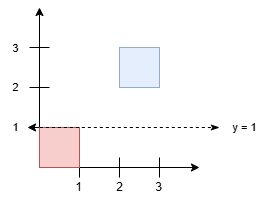
任何在 y = 1 和 y = 2 之间的水平线都会有 1 平方单位的面积在其上方,1 平方单位的面积在其下方。最小的 y 坐标是 1。
示例 2:
输入: squares = [[0,0,2],[1,1,1]]
输出: 1.00000
解释:
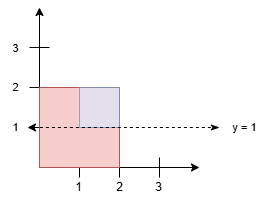
由于蓝色正方形和红色正方形有重叠区域且重叠区域只统计一次。所以直线 y = 1 将正方形分割成两部分且面积相等。
提示:
1 <= squares.length <= 5 * 104squares[i] = [xi, yi, li]squares[i].length == 30 <= xi, yi <= 1091 <= li <= 109- 所有正方形的总面积不超过
1015。
解题思路
方法一:扫描线
本题可以使用扫描线算法来计算所有正方形的总面积。
我们将每个正方形的上下边界作为扫描线的事件点,按 坐标从小到大排序。对于每个事件点,我们使用线段树来维护当前扫描线下方被覆盖的 轴区间长度,从而计算出当前扫描线与上一个扫描线之间的面积增量。
具体步骤如下:
- 预处理事件点:对于每个正方形,计算其上下边界的 坐标,并将其作为事件点加入事件列表中。每个事件点包含 坐标、左边界 、右边界 以及一个标志(表示是上边界还是下边界)。
- 排序事件点:将所有事件点按 坐标从小到大排序。
- 构建线段树:使用离散化后的 坐标构建线段树,用于维护当前被覆盖的 轴区间长度。
- 扫描事件点:遍历排序后的事件点列表,对于每个事件点:
- 计算当前事件点与上一个事件点之间的面积增量,并累加到总面积中。
- 根据当前事件点的类型(上边界或下边界),更新线段树,增加或减少对应的 轴区间覆盖计数。
- 计算目标面积:总面积的一半即为目标面积。
- 再次扫描事件点:再次遍历事件点列表,计算累计面积,当累计面积达到目标面积时,计算并返回对应的 坐标。
时间复杂度 ,空间复杂度 。其中 是正方形的数量。
class Node:
    __slots__ = ("l", "r", "cnt", "length")

    def __init__(self):
        self.l = self.r = 0
        self.cnt = self.length = 0


class SegmentTree:
    def __init__(self, nums):
        n = len(nums) - 1
        self.nums = nums
        self.tr = [Node() for _ in range(n << 2)]
        self.build(1, 0, n - 1)

    def build(self, u, l, r):
        self.tr[u].l, self.tr[u].r = l, r
        if l != r:
            mid = (l + r) >> 1
            self.build(u << 1, l, mid)
            self.build(u << 1 | 1, mid + 1, r)

    def modify(self, u, l, r, k):
        if self.tr[u].l >= l and self.tr[u].r <= r:
            self.tr[u].cnt += k
        else:
            mid = (self.tr[u].l + self.tr[u].r) >> 1
            if l <= mid:
                self.modify(u << 1, l, r, k)
            if r > mid:
                self.modify(u << 1 | 1, l, r, k)
        self.pushup(u)

    def pushup(self, u):
        if self.tr[u].cnt:
            self.tr[u].length = self.nums[self.tr[u].r + 1] - self.nums[self.tr[u].l]
        elif self.tr[u].l == self.tr[u].r:
            self.tr[u].length = 0
        else:
            self.tr[u].length = self.tr[u << 1].length + self.tr[u << 1 | 1].length

    @property
    def length(self):
        return self.tr[1].length


class Solution:
    def separateSquares(self, squares: List[List[int]]) -> float:
        xs = set()
        segs = []
        for x1, y1, l in squares:
            x2, y2 = x1 + l, y1 + l
            xs.update([x1, x2])
            segs.append((y1, x1, x2, 1))
            segs.append((y2, x1, x2, -1))
        segs.sort()
        st = sorted(xs)
        tree = SegmentTree(st)
        d = {x: i for i, x in enumerate(st)}
        area = 0
        y0 = 0
        for y, x1, x2, k in segs:
            area += (y - y0) * tree.length
            tree.modify(1, d[x1], d[x2] - 1, k)
            y0 = y

        target = area / 2
        area = 0
        y0 = 0
        for y, x1, x2, k in segs:
            t = (y - y0) * tree.length
            if area + t >= target:
                return y0 + (target - area) / tree.length
            area += t
            tree.modify(1, d[x1], d[x2] - 1, k)
            y0 = y
        return 0
复杂度分析
| 指标 | 值 |
|---|---|
| 时间 | Depends on the final approach |
| 空间 | Depends on the final approach |
面试官常问的追问
外企场景- question_mark
Can the candidate explain why binary search is effective in this problem?
- question_mark
Does the candidate know how to efficiently manage area updates when using segment trees?
- question_mark
Is the candidate aware of the potential pitfalls with overlapping squares?
常见陷阱
外企场景- error
Not handling square overlaps correctly, resulting in inaccurate area calculations.
- error
Incorrect binary search boundaries leading to suboptimal or incorrect solutions.
- error
Failure to efficiently use the segment tree for area updates during the line sweep process.
进阶变体
外企场景- arrow_right_alt
What if the number of squares increases significantly? Can the solution scale to handle larger inputs?
- arrow_right_alt
What happens if we modify the problem to split the area into a ratio other than 50/50?
- arrow_right_alt
How would the solution change if we were to account for square rotation or other transformations?