

LeetCode 题解工作台
积压订单中的订单总数
给你一个二维整数数组 orders ,其中每个 orders[i] = [price i , amount i , orderType i ] 表示有 amount i 笔类型为 orderType i 、价格为 price i 的订单。 订单类型 orderType i 可以分为两种: 0 表示这…
3
题型
4
代码语言
3
相关题
当前训练重点
中等 · 堆
答案摘要
我们可以使用优先队列(大小根堆)维护当前的积压订单,其中大根堆 `buy` 维护积压的采购订单,小根堆 `sell` 维护积压的销售订单。堆中每个元素是一个二元组 $(price, amount)$,表示价格为 `price` 的订单数量为 `amount`。 接下来,我们遍历订单数组 `orders` ,根据题意模拟即可。


Interview AiBoxInterview AiBox 实时 AI 助手,陪你讲清 堆 题型思路
题目描述
给你一个二维整数数组 orders ,其中每个 orders[i] = [pricei, amounti, orderTypei] 表示有 amounti 笔类型为 orderTypei 、价格为 pricei 的订单。
订单类型 orderTypei 可以分为两种:
0表示这是一批采购订单buy1表示这是一批销售订单sell
注意,orders[i] 表示一批共计 amounti 笔的独立订单,这些订单的价格和类型相同。对于所有有效的 i ,由 orders[i] 表示的所有订单提交时间均早于 orders[i+1] 表示的所有订单。
存在由未执行订单组成的 积压订单 。积压订单最初是空的。提交订单时,会发生以下情况:
- 如果该订单是一笔采购订单
buy,则可以查看积压订单中价格 最低 的销售订单sell。如果该销售订单sell的价格 低于或等于 当前采购订单buy的价格,则匹配并执行这两笔订单,并将销售订单sell从积压订单中删除。否则,采购订单buy将会添加到积压订单中。 - 反之亦然,如果该订单是一笔销售订单
sell,则可以查看积压订单中价格 最高 的采购订单buy。如果该采购订单buy的价格 高于或等于 当前销售订单sell的价格,则匹配并执行这两笔订单,并将采购订单buy从积压订单中删除。否则,销售订单sell将会添加到积压订单中。
输入所有订单后,返回积压订单中的 订单总数 。由于数字可能很大,所以需要返回对 109 + 7 取余的结果。
示例 1:
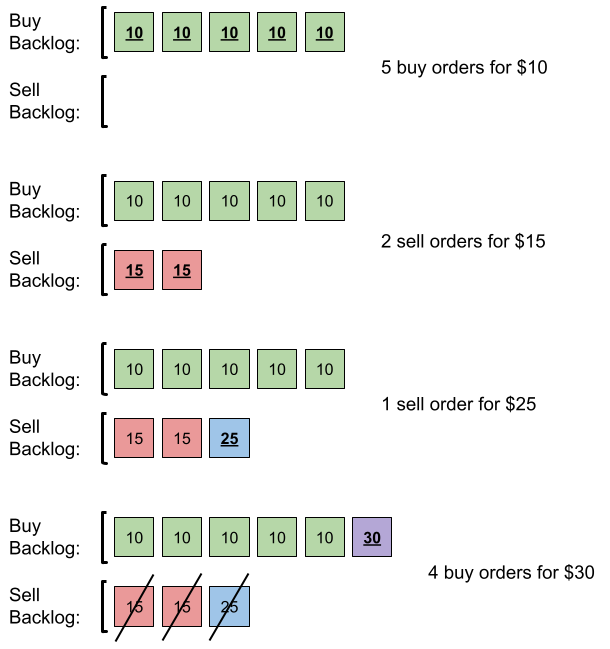
输入:orders = [[10,5,0],[15,2,1],[25,1,1],[30,4,0]]
输出:6
解释:输入订单后会发生下述情况:
- 提交 5 笔采购订单,价格为 10 。没有销售订单,所以这 5 笔订单添加到积压订单中。
- 提交 2 笔销售订单,价格为 15 。没有采购订单的价格大于或等于 15 ,所以这 2 笔订单添加到积压订单中。
- 提交 1 笔销售订单,价格为 25 。没有采购订单的价格大于或等于 25 ,所以这 1 笔订单添加到积压订单中。
- 提交 4 笔采购订单,价格为 30 。前 2 笔采购订单与价格最低(价格为 15)的 2 笔销售订单匹配,从积压订单中删除这 2 笔销售订单。第 3 笔采购订单与价格最低的 1 笔销售订单匹配,销售订单价格为 25 ,从积压订单中删除这 1 笔销售订单。积压订单中不存在更多销售订单,所以第 4 笔采购订单需要添加到积压订单中。
最终,积压订单中有 5 笔价格为 10 的采购订单,和 1 笔价格为 30 的采购订单。所以积压订单中的订单总数为 6 。
示例 2:
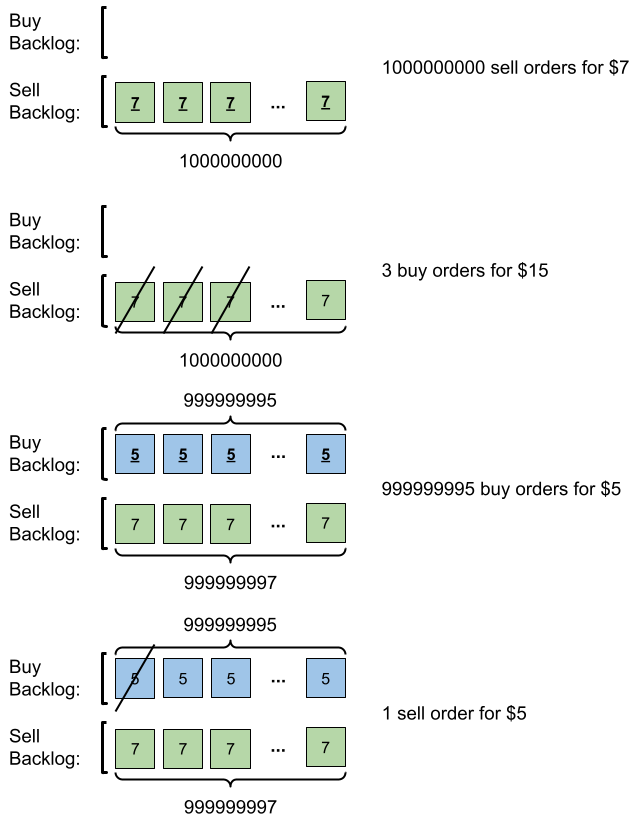
输入:orders = [[7,1000000000,1],[15,3,0],[5,999999995,0],[5,1,1]]
输出:999999984
解释:输入订单后会发生下述情况:
- 提交 109 笔销售订单,价格为 7 。没有采购订单,所以这 109 笔订单添加到积压订单中。
- 提交 3 笔采购订单,价格为 15 。这些采购订单与价格最低(价格为 7 )的 3 笔销售订单匹配,从积压订单中删除这 3 笔销售订单。
- 提交 999999995 笔采购订单,价格为 5 。销售订单的最低价为 7 ,所以这 999999995 笔订单添加到积压订单中。
- 提交 1 笔销售订单,价格为 5 。这笔销售订单与价格最高(价格为 5 )的 1 笔采购订单匹配,从积压订单中删除这 1 笔采购订单。
最终,积压订单中有 (1000000000-3) 笔价格为 7 的销售订单,和 (999999995-1) 笔价格为 5 的采购订单。所以积压订单中的订单总数为 1999999991 ,等于 999999984 % (109 + 7) 。
提示:
1 <= orders.length <= 105orders[i].length == 31 <= pricei, amounti <= 109orderTypei为0或1
解题思路
方法一:优先队列(大小根堆) + 模拟
我们可以使用优先队列(大小根堆)维护当前的积压订单,其中大根堆 buy 维护积压的采购订单,小根堆 sell 维护积压的销售订单。堆中每个元素是一个二元组 ,表示价格为 price 的订单数量为 amount。
接下来,我们遍历订单数组 orders ,根据题意模拟即可。
遍历结束后,我们将 buy 和 sell 中的订单数量相加,即为最终的积压订单数量。注意答案可能很大,需要对 取模。
时间复杂度 ,空间复杂度 。其中 是 orders 的长度。
class Solution:
    def getNumberOfBacklogOrders(self, orders: List[List[int]]) -> int:
        buy, sell = [], []
        for p, a, t in orders:
            if t == 0:
                while a and sell and sell[0][0] <= p:
                    x, y = heappop(sell)
                    if a >= y:
                        a -= y
                    else:
                        heappush(sell, (x, y - a))
                        a = 0
                if a:
                    heappush(buy, (-p, a))
            else:
                while a and buy and -buy[0][0] >= p:
                    x, y = heappop(buy)
                    if a >= y:
                        a -= y
                    else:
                        heappush(buy, (x, y - a))
                        a = 0
                if a:
                    heappush(sell, (p, a))
        mod = 10**9 + 7
        return sum(v[1] for v in buy + sell) % mod
复杂度分析
| 指标 | 值 |
|---|---|
| 时间 | complexity is O(n log n) because each order may be pushed or popped from a heap at most once, and heap operations are log n. Space complexity is O(n) to store backlog orders in the heaps. |
| 空间 | Depends on the final approach |
面试官常问的追问
外企场景- question_mark
Mentions using heaps to simulate the order backlog efficiently.
- question_mark
Asks about matching orders greedily by price.
- question_mark
Questions about handling large order quantities without overflow.
常见陷阱
外企场景- error
Forgetting to process all batches in orders[i] when amounti > 1.
- error
Mixing up max heap for buy orders and min heap for sell orders.
- error
Incorrectly summing leftover orders leading to modulo mistakes.
进阶变体
外企场景- arrow_right_alt
Orders arriving in random order instead of sequentially by time.
- arrow_right_alt
Including additional order types beyond buy and sell.
- arrow_right_alt
Changing the matching rule to first-come-first-served instead of price priority.