

LeetCode 题解工作台
修改图中的边权
给你一个 n 个节点的 无向带权连通 图,节点编号为 0 到 n - 1 ,再给你一个整数数组 edges ,其中 edges[i] = [a i , b i , w i ] 表示节点 a i 和 b i 之间有一条边权为 w i 的边。 部分边的边权为 -1 ( w i = -1 ),其他边的边权…
3
题型
5
代码语言
3
相关题
当前训练重点
困难 · 堆
答案摘要
我们先不考虑边权为 的边,使用 Dijkstra 算法求出从 到 的最短距离 。 如果 $d \lt target$,说明存在一条完全由正权边组成的最短路径,此时无论我们如何修改边权为 的边,都无法使得 到 的最短距离等于 ,因此不存在满足题意的修改方案,返回一个空数组即可。


Interview AiBoxInterview AiBox 实时 AI 助手,陪你讲清 堆 题型思路
题目描述
给你一个 n 个节点的 无向带权连通 图,节点编号为 0 到 n - 1 ,再给你一个整数数组 edges ,其中 edges[i] = [ai, bi, wi] 表示节点 ai 和 bi 之间有一条边权为 wi 的边。
部分边的边权为 -1(wi = -1),其他边的边权都为 正 数(wi > 0)。
你需要将所有边权为 -1 的边都修改为范围 [1, 2 * 109] 中的 正整数 ,使得从节点 source 到节点 destination 的 最短距离 为整数 target 。如果有 多种 修改方案可以使 source 和 destination 之间的最短距离等于 target ,你可以返回任意一种方案。
如果存在使 source 到 destination 最短距离为 target 的方案,请你按任意顺序返回包含所有边的数组(包括未修改边权的边)。如果不存在这样的方案,请你返回一个 空数组 。
注意:你不能修改一开始边权为正数的边。
示例 1:
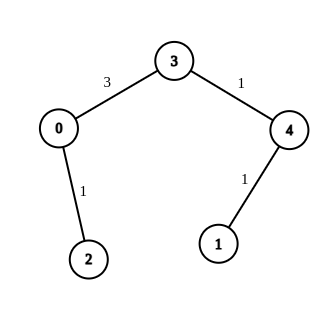
输入:n = 5, edges = [[4,1,-1],[2,0,-1],[0,3,-1],[4,3,-1]], source = 0, destination = 1, target = 5
输出:[[4,1,1],[2,0,1],[0,3,3],[4,3,1]]
解释:上图展示了一个满足题意的修改方案,从 0 到 1 的最短距离为 5 。
示例 2:
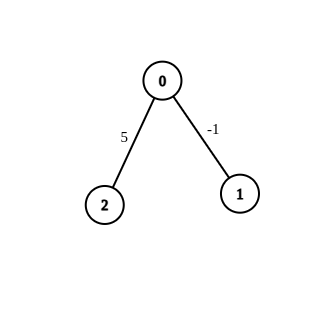
输入:n = 3, edges = [[0,1,-1],[0,2,5]], source = 0, destination = 2, target = 6
输出:[]
解释:上图是一开始的图。没有办法通过修改边权为 -1 的边,使得 0 到 2 的最短距离等于 6 ,所以返回一个空数组。
示例 3:
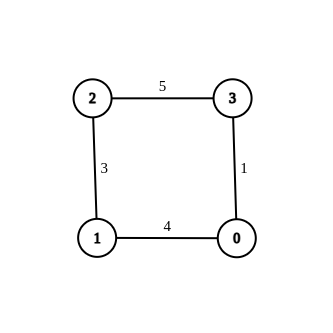
输入:n = 4, edges = [[1,0,4],[1,2,3],[2,3,5],[0,3,-1]], source = 0, destination = 2, target = 6
输出:[[1,0,4],[1,2,3],[2,3,5],[0,3,1]]
解释:上图展示了一个满足题意的修改方案,从 0 到 2 的最短距离为 6 。
提示:
1 <= n <= 1001 <= edges.length <= n * (n - 1) / 2edges[i].length == 30 <= ai, bi < nwi = -1或者1 <= wi <= 107ai != bi0 <= source, destination < nsource != destination1 <= target <= 109- 输入的图是连通图,且没有自环和重边。
解题思路
方法一:最短路(Dijkstra 算法)
我们先不考虑边权为 的边,使用 Dijkstra 算法求出从 到 的最短距离 。
如果 ,说明存在一条完全由正权边组成的最短路径,此时无论我们如何修改边权为 的边,都无法使得 到 的最短距离等于 ,因此不存在满足题意的修改方案,返回一个空数组即可。
如果 ,说明存在一条完全由正权边组成的、长度为 的最短路径,此时我们可以将所有边权为 的边修改为最大值 即可。
如果 ,我们可以尝试往图中加入一条边权为 的边,将边权设置为 ,然后再次使用 Dijkstra 算法求出从 到 的最短距离 。
- 如果最短距离 ,说明加入这条边后,可以使得最短路变短,而且最短路也一定经过这条边,那么我们只需要将这条边的边权改为 ,就可以使得最短路等于 。然后我们将其余的边权为 的边修改为最大值 即可。
- 如果最短距离 ,说明加入这条边后,最短路不会变短,那么我们贪心地将这条边的边权保持为 ,然后继续尝试加入其余的边权为 的边。
时间复杂度 ,空间复杂度 。其中 是图中的点数。
class Solution:
    def modifiedGraphEdges(
        self, n: int, edges: List[List[int]], source: int, destination: int, target: int
    ) -> List[List[int]]:
        def dijkstra(edges: List[List[int]]) -> int:
            g = [[inf] * n for _ in range(n)]
            for a, b, w in edges:
                if w == -1:
                    continue
                g[a][b] = g[b][a] = w
            dist = [inf] * n
            dist[source] = 0
            vis = [False] * n
            for _ in range(n):
                k = -1
                for j in range(n):
                    if not vis[j] and (k == -1 or dist[k] > dist[j]):
                        k = j
                vis[k] = True
                for j in range(n):
                    dist[j] = min(dist[j], dist[k] + g[k][j])
            return dist[destination]

        inf = 2 * 10**9
        d = dijkstra(edges)
        if d < target:
            return []
        ok = d == target
        for e in edges:
            if e[2] > 0:
                continue
            if ok:
                e[2] = inf
                continue
            e[2] = 1
            d = dijkstra(edges)
            if d <= target:
                ok = True
                e[2] += target - d
        return edges if ok else []
复杂度分析
| 指标 | 值 |
|---|---|
| 时间 | O(E \times (V + E) \log V) |
| 空间 | O(V + E) |
面试官常问的追问
外企场景- question_mark
Ensure the candidate applies graph traversal techniques like Dijkstra's or Bellman-Ford to efficiently solve the problem.
- question_mark
Look for the candidate's ability to implement priority queues and modify edge weights dynamically.
- question_mark
Evaluate how the candidate handles edge cases where the target distance is not achievable.
常见陷阱
外企场景- error
Not checking the feasibility of achieving the target distance before attempting to modify edge weights.
- error
Incorrectly assigning edge weights without considering their impact on the shortest path.
- error
Overlooking edge cases where no valid solution exists and returning an empty array.
进阶变体
外企场景- arrow_right_alt
Extend the problem to allow negative weights and test how the algorithm handles this scenario.
- arrow_right_alt
Consider modifying the graph with additional constraints, such as limiting the total number of edge modifications.
- arrow_right_alt
Optimize the algorithm for larger graphs, improving efficiency with advanced graph traversal methods or heuristics.