

LeetCode 题解工作台
切蛋糕的最小总开销 II
有一个 m x n 大小的矩形蛋糕,需要切成 1 x 1 的小块。 给你整数 m , n 和两个数组: horizontalCut 的大小为 m - 1 ,其中 horizontalCut[i] 表示沿着水平线 i 切蛋糕的开销。 verticalCut 的大小为 n - 1 ,其中 vertica…
3
题型
6
代码语言
3
相关题
当前训练重点
困难 · 贪心·invariant
答案摘要
对于一个位置,越早切,所需要切的次数越少,因此,显然是开销越大的位置越早切。 所以,我们可以对数组 和 按照从大到小的顺序排序,然后使用两个指针 和 分别指向 和 的开销,每次选择开销较大的位置进行切割,同时更新对应的行数和列数。


Interview AiBoxInterview AiBox 实时 AI 助手,陪你讲清 贪心·invariant 题型思路
题目描述
有一个 m x n 大小的矩形蛋糕,需要切成 1 x 1 的小块。
给你整数 m ,n 和两个数组:
horizontalCut的大小为m - 1,其中horizontalCut[i]表示沿着水平线i切蛋糕的开销。verticalCut的大小为n - 1,其中verticalCut[j]表示沿着垂直线j切蛋糕的开销。
一次操作中,你可以选择任意不是 1 x 1 大小的矩形蛋糕并执行以下操作之一:
- 沿着水平线
i切开蛋糕,开销为horizontalCut[i]。 - 沿着垂直线
j切开蛋糕,开销为verticalCut[j]。
每次操作后,这块蛋糕都被切成两个独立的小蛋糕。
每次操作的开销都为最开始对应切割线的开销,并且不会改变。
请你返回将蛋糕全部切成 1 x 1 的蛋糕块的 最小 总开销。
示例 1:
输入:m = 3, n = 2, horizontalCut = [1,3], verticalCut = [5]
输出:13
解释:
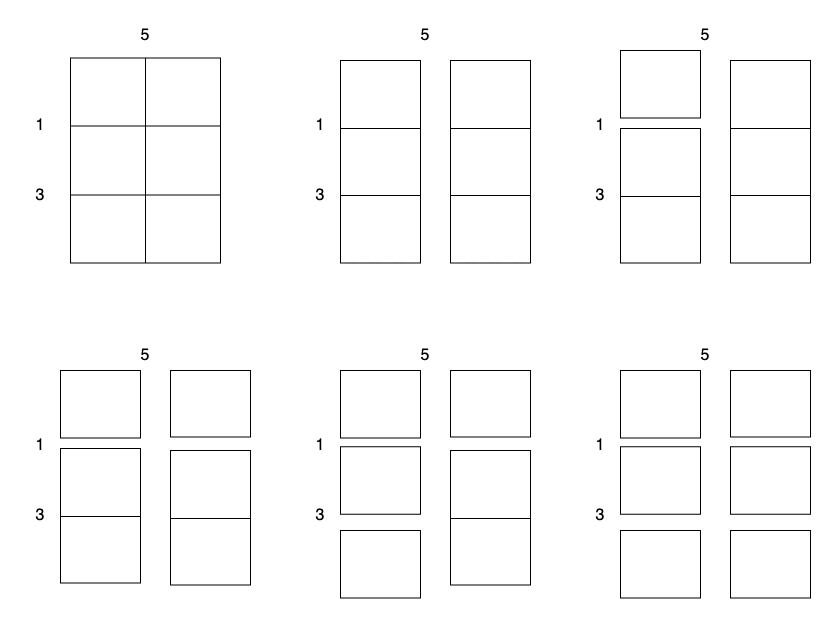
- 沿着垂直线 0 切开蛋糕,开销为 5 。
- 沿着水平线 0 切开
3 x 1的蛋糕块,开销为 1 。 - 沿着水平线 0 切开
3 x 1的蛋糕块,开销为 1 。 - 沿着水平线 1 切开
2 x 1的蛋糕块,开销为 3 。 - 沿着水平线 1 切开
2 x 1的蛋糕块,开销为 3 。
总开销为 5 + 1 + 1 + 3 + 3 = 13 。
示例 2:
输入:m = 2, n = 2, horizontalCut = [7], verticalCut = [4]
输出:15
解释:
- 沿着水平线 0 切开蛋糕,开销为 7 。
- 沿着垂直线 0 切开
1 x 2的蛋糕块,开销为 4 。 - 沿着垂直线 0 切开
1 x 2的蛋糕块,开销为 4 。
总开销为 7 + 4 + 4 = 15 。
提示:
1 <= m, n <= 105horizontalCut.length == m - 1verticalCut.length == n - 11 <= horizontalCut[i], verticalCut[i] <= 103
解题思路
方法一:贪心 + 双指针
对于一个位置,越早切,所需要切的次数越少,因此,显然是开销越大的位置越早切。
所以,我们可以对数组 和 按照从大到小的顺序排序,然后使用两个指针 和 分别指向 和 的开销,每次选择开销较大的位置进行切割,同时更新对应的行数和列数。
每次在水平方向上切割时,如果此前列数为 ,那么此次的开销为 ,然后行数 加一;同理,每次在垂直方向上切割时,如果此前行数为 ,那么此次的开销为 ,然后列数 加一。
最后,当 和 都到达末尾时,返回总开销即可。
时间复杂度 ,空间复杂度 。其中 和 分别为 和 的长度。
class Solution:
    def minimumCost(
        self, m: int, n: int, horizontalCut: List[int], verticalCut: List[int]
    ) -> int:
        horizontalCut.sort(reverse=True)
        verticalCut.sort(reverse=True)
        ans = i = j = 0
        h = v = 1
        while i < m - 1 or j < n - 1:
            if j == n - 1 or (i < m - 1 and horizontalCut[i] > verticalCut[j]):
                ans += horizontalCut[i] * v
                h, i = h + 1, i + 1
            else:
                ans += verticalCut[j] * h
                v, j = v + 1, j + 1
        return ans
复杂度分析
| 指标 | 值 |
|---|---|
| 时间 | complexity is O((m+n) log(m+n)) due to sorting both cut arrays. Space complexity is O(1) extra beyond the input arrays, as only segment counters and total cost need storage. |
| 空间 | Depends on the final approach |
面试官常问的追问
外企场景- question_mark
Asks how to prioritize horizontal vs vertical cuts based on cost impact.
- question_mark
Checks if you correctly multiply each cut cost by the current perpendicular segment count.
- question_mark
Probes understanding of cumulative cost tracking and failure modes when order is incorrect.
常见陷阱
外企场景- error
Failing to sort the cuts and choosing suboptimal smaller costs first.
- error
Incorrectly calculating cost by not accounting for current perpendicular segments.
- error
Updating segment counts in wrong order leading to overcounted or undercounted total cost.
进阶变体
外企场景- arrow_right_alt
Cutting rectangles with arbitrary costs and different unit sizes.
- arrow_right_alt
Maximizing revenue instead of minimizing cost with the same greedy approach.
- arrow_right_alt
Adding a restriction on the number of allowable cuts in one direction.