

LeetCode 题解工作台
图中最大星和
给你一个 n 个点的无向图,节点从 0 到 n - 1 编号。给你一个长度为 n 下标从 0 开始的整数数组 vals ,其中 vals[i] 表示第 i 个节点的值。 同时给你一个二维整数数组 edges ,其中 edges[i] = [a i , b i ] 表示节点 a i 和 b i 之间有…
5
题型
4
代码语言
3
相关题
当前训练重点
中等 · 贪心·invariant
答案摘要
我们先将输入的边集合转换成邻接表,其中 表示节点 的邻居节点的值列表,且按照值的降序排列。 然后我们遍历每个节点 ,计算以 为中心节点的星图的最大星和,即 $vals[i] + \sum_{j=0}^{k-1} g[i][j]$,并且更新最大星和。


Interview AiBoxInterview AiBox 实时 AI 助手,陪你讲清 贪心·invariant 题型思路
题目描述
给你一个 n 个点的无向图,节点从 0 到 n - 1 编号。给你一个长度为 n 下标从 0 开始的整数数组 vals ,其中 vals[i] 表示第 i 个节点的值。
同时给你一个二维整数数组 edges ,其中 edges[i] = [ai, bi] 表示节点 ai 和 bi 之间有一条双向边。
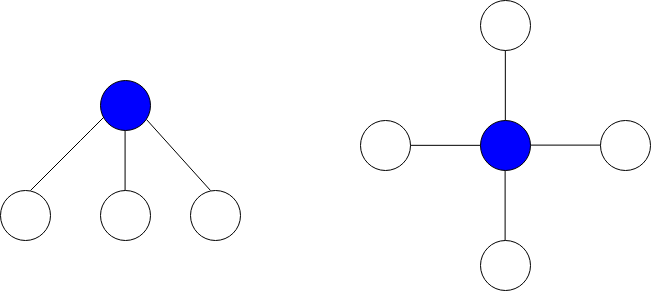
星图 是给定图中的一个子图,它包含一个中心节点和 0 个或更多个邻居。换言之,星图是给定图中一个边的子集,且这些边都有一个公共节点。
下图分别展示了有 3 个和 4 个邻居的星图,蓝色节点为中心节点。
星和 定义为星图中所有节点值的和。
给你一个整数 k ,请你返回 至多 包含 k 条边的星图中的 最大星和 。
示例 1:
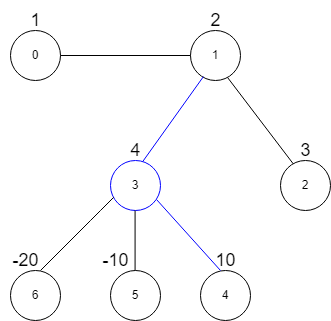
输入:vals = [1,2,3,4,10,-10,-20], edges = [[0,1],[1,2],[1,3],[3,4],[3,5],[3,6]], k = 2
输出:16
解释:上图展示了输入示例。
最大星和对应的星图在上图中用蓝色标出。中心节点是 3 ,星图中还包含邻居 1 和 4 。
无法得到一个和大于 16 且边数不超过 2 的星图。
示例 2:
输入:vals = [-5], edges = [], k = 0
输出:-5
解释:只有一个星图,就是节点 0 自己。
所以我们返回 -5 。
提示:
n == vals.length1 <= n <= 105-104 <= vals[i] <= 1040 <= edges.length <= min(n * (n - 1) / 2, 105)edges[i].length == 20 <= ai, bi <= n - 1ai != bi0 <= k <= n - 1
解题思路
方法一:排序 + 模拟
我们先将输入的边集合转换成邻接表,其中 表示节点 的邻居节点的值列表,且按照值的降序排列。
然后我们遍历每个节点 ,计算以 为中心节点的星图的最大星和,即 ,并且更新最大星和。
最后返回最大星和即可。
时间复杂度 ,空间复杂度 ,其中 为节点数。
class Solution:
    def maxStarSum(self, vals: List[int], edges: List[List[int]], k: int) -> int:
        g = defaultdict(list)
        for a, b in edges:
            if vals[b] > 0:
                g[a].append(vals[b])
            if vals[a] > 0:
                g[b].append(vals[a])
        for bs in g.values():
            bs.sort(reverse=True)
        return max(v + sum(g[i][:k]) for i, v in enumerate(vals))
复杂度分析
| 指标 | 值 |
|---|---|
| 时间 | Depends on the final approach |
| 空间 | Depends on the final approach |
面试官常问的追问
外企场景- question_mark
The candidate should recognize that greedy choices and local optimization are key to maximizing the star sum.
- question_mark
Look for understanding of graph traversal and how to handle neighbors efficiently without unnecessary computations.
- question_mark
Candidates should demonstrate the ability to implement the greedy approach and validate the sum correctly.
常见陷阱
外企场景- error
Forgetting that not all neighbors should be included—only those that increase the sum.
- error
Overcomplicating the selection of neighbors or failing to efficiently sort and choose the top k neighbors.
- error
Misunderstanding the problem constraints and attempting to include all neighbors instead of limiting the number.
进阶变体
外企场景- arrow_right_alt
Allowing more than k neighbors to be selected may change the approach and solution complexity.
- arrow_right_alt
Instead of maximizing the sum, trying to minimize it by selecting the least beneficial neighbors.
- arrow_right_alt
Expanding to weighted graphs where edges also contribute to the sum would increase the complexity of the problem.