

LeetCode 题解工作台
射箭比赛中的最大得分
Alice 和 Bob 是一场射箭比赛中的对手。比赛规则如下: Alice 先射 numArrows 支箭,然后 Bob 也射 numArrows 支箭。 分数按下述规则计算: 箭靶有若干整数计分区域,范围从 0 到 11 (含 0 和 11 )。 箭靶上每个区域都对应一个得分 k (范围是 0 到…
4
题型
7
代码语言
3
相关题
当前训练重点
中等 · 回溯·pruning
答案摘要
由于区域数目只有 个,因此我们使用二进制枚举的方式,枚举 在哪些区域得分。用一个变量 表示 获得最大得分的方案,而 表示 获得的最大得分。 我们在 $[1, 2^m)$ 的区间内枚举 的得分方案,其中 是 的长度。对于每一个方案,我们计算 的得分 以及射箭的数量 。如果 $\textit{cnt} \leq \textit{numArrows}$ 且 $\textit{s} …


Interview AiBoxInterview AiBox 实时 AI 助手,陪你讲清 回溯·pruning 题型思路
题目描述
Alice 和 Bob 是一场射箭比赛中的对手。比赛规则如下:
- Alice 先射
numArrows支箭,然后 Bob 也射numArrows支箭。 - 分数按下述规则计算:
- 箭靶有若干整数计分区域,范围从
0到11(含0和11)。 - 箭靶上每个区域都对应一个得分
k(范围是0到11),Alice 和 Bob 分别在得分k区域射中ak和bk支箭。如果ak >= bk,那么 Alice 得k分。如果ak < bk,则 Bob 得k分 - 如果
ak == bk == 0,那么无人得到k分。
- 箭靶有若干整数计分区域,范围从
-
例如,Alice 和 Bob 都向计分为
11的区域射2支箭,那么 Alice 得11分。如果 Alice 向计分为11的区域射0支箭,但 Bob 向同一个区域射2支箭,那么 Bob 得11分。
给你整数 numArrows 和一个长度为 12 的整数数组 aliceArrows ,该数组表示 Alice 射中 0 到 11 每个计分区域的箭数量。现在,Bob 想要尽可能 最大化 他所能获得的总分。
返回数组 bobArrows ,该数组表示 Bob 射中 0 到 11 每个 计分区域的箭数量。且 bobArrows 的总和应当等于 numArrows 。
如果存在多种方法都可以使 Bob 获得最大总分,返回其中 任意一种 即可。
示例 1:
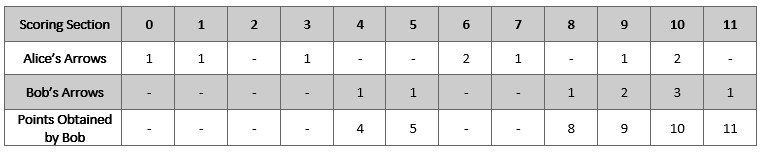
输入:numArrows = 9, aliceArrows = [1,1,0,1,0,0,2,1,0,1,2,0]
输出:[0,0,0,0,1,1,0,0,1,2,3,1]
解释:上表显示了比赛得分情况。
Bob 获得总分 4 + 5 + 8 + 9 + 10 + 11 = 47 。
可以证明 Bob 无法获得比 47 更高的分数。
示例 2:

输入:numArrows = 3, aliceArrows = [0,0,1,0,0,0,0,0,0,0,0,2]
输出:[0,0,0,0,0,0,0,0,1,1,1,0]
解释:上表显示了比赛得分情况。
Bob 获得总分 8 + 9 + 10 = 27 。
可以证明 Bob 无法获得比 27 更高的分数。
提示:
1 <= numArrows <= 105aliceArrows.length == bobArrows.length == 120 <= aliceArrows[i], bobArrows[i] <= numArrowssum(aliceArrows[i]) == numArrows
解题思路
方法一:二进制枚举
由于区域数目只有 个,因此我们使用二进制枚举的方式,枚举 在哪些区域得分。用一个变量 表示 获得最大得分的方案,而 表示 获得的最大得分。
我们在 的区间内枚举 的得分方案,其中 是 的长度。对于每一个方案,我们计算 的得分 以及射箭的数量 。如果 且 ,我们就更新 和 。
然后,我们根据 计算 的得分方案,如果最后还有剩余的射箭,我们将剩余的射箭分配给第一个区域,即下标为 的区域。
时间复杂度 ,其中 是 的长度。忽略答案数组的空间消耗,空间复杂度 。
class Solution:
    def maximumBobPoints(self, numArrows: int, aliceArrows: List[int]) -> List[int]:
        st = mx = 0
        m = len(aliceArrows)
        for mask in range(1, 1 << m):
            cnt = s = 0
            for i, x in enumerate(aliceArrows):
                if mask >> i & 1:
                    s += i
                    cnt += x + 1
            if cnt <= numArrows and s > mx:
                mx = s
                st = mask
        ans = [0] * m
        for i, x in enumerate(aliceArrows):
            if st >> i & 1:
                ans[i] = x + 1
                numArrows -= ans[i]
        ans[0] += numArrows
        return ans
复杂度分析
| 指标 | 值 |
|---|---|
| 时间 | Depends on the final approach |
| 空间 | Depends on the final approach |
面试官常问的追问
外企场景- question_mark
Candidate suggests using backtracking with pruning to explore different arrow distributions.
- question_mark
Candidate attempts to optimize the solution using greedy selection or bit manipulation techniques.
- question_mark
Candidate demonstrates an understanding of how pruning reduces unnecessary calculations in this problem.
常见陷阱
外企场景- error
Failing to prune invalid paths early can lead to excessive computation and timeouts.
- error
Not considering edge cases where numArrows is small or very large can lead to incorrect solutions.
- error
Misunderstanding the problem's goal, such as incorrectly distributing arrows without considering the competition's scoring system.
进阶变体
外企场景- arrow_right_alt
Alter the number of sections (reduce or increase the size of the aliceArrows array).
- arrow_right_alt
Introduce additional constraints on the number of arrows Bob can shoot in each section.
- arrow_right_alt
Consider allowing a greater number of arrows or a limit on how many sections Bob must outscore Alice.