

LeetCode 题解工作台
价格范围内最高排名的 K 样物品
给你一个下标从 0 开始的二维整数数组 grid ,它的大小为 m x n ,表示一个商店中物品的分布图。数组中的整数含义为: 0 表示无法穿越的一堵墙。 1 表示可以自由通过的一个空格子。 所有其他正整数表示该格子内的一样物品的价格。你可以自由经过这些格子。 从一个格子走到上下左右相邻格子花费 1…
5
题型
5
代码语言
3
相关题
当前训练重点
中等 · 图·搜索
答案摘要
我们可以从 $(\textit{row}, \textit{col})$ 出发,使用广度优先搜索找到所有价格在 $[\textit{low}, \textit{high}]$ 范围内的物品,将这些物品的距离、价格、行坐标和列坐标存入数组 中。 最后对 按照距离、价格、行坐标和列坐标的顺序排序,取前 个物品的坐标返回。


Interview AiBoxInterview AiBox 实时 AI 助手,陪你讲清 图·搜索 题型思路
题目描述
给你一个下标从 0 开始的二维整数数组 grid ,它的大小为 m x n ,表示一个商店中物品的分布图。数组中的整数含义为:
0表示无法穿越的一堵墙。1表示可以自由通过的一个空格子。- 所有其他正整数表示该格子内的一样物品的价格。你可以自由经过这些格子。
从一个格子走到上下左右相邻格子花费 1 步。
同时给你一个整数数组 pricing 和 start ,其中 pricing = [low, high] 且 start = [row, col] ,表示你开始位置为 (row, col) ,同时你只对物品价格在 闭区间 [low, high] 之内的物品感兴趣。同时给你一个整数 k 。
你想知道给定范围 内 且 排名最高 的 k 件物品的 位置 。排名按照优先级从高到低的以下规则制定:
- 距离:定义为从
start到一件物品的最短路径需要的步数(较近 距离的排名更高)。 - 价格:较低 价格的物品有更高优先级,但只考虑在给定范围之内的价格。
- 行坐标:较小 行坐标的有更高优先级。
- 列坐标:较小 列坐标的有更高优先级。
请你返回给定价格内排名最高的 k 件物品的坐标,将它们按照排名排序后返回。如果给定价格内少于 k 件物品,那么请将它们的坐标 全部 返回。
示例 1:
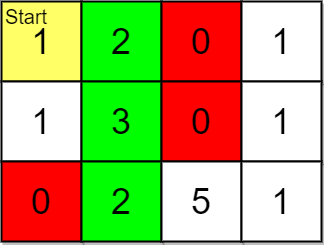
输入:grid = [[1,2,0,1],[1,3,0,1],[0,2,5,1]], pricing = [2,5], start = [0,0], k = 3
输出:[[0,1],[1,1],[2,1]]
解释:起点为 (0,0) 。
价格范围为 [2,5] ,我们可以选择的物品坐标为 (0,1),(1,1),(2,1) 和 (2,2) 。
这些物品的排名为:
- (0,1) 距离为 1
- (1,1) 距离为 2
- (2,1) 距离为 3
- (2,2) 距离为 4
所以,给定价格范围内排名最高的 3 件物品的坐标为 (0,1),(1,1) 和 (2,1) 。
示例 2:
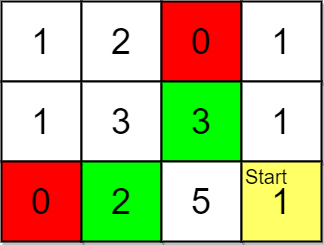
输入:grid = [[1,2,0,1],[1,3,3,1],[0,2,5,1]], pricing = [2,3], start = [2,3], k = 2
输出:[[2,1],[1,2]]
解释:起点为 (2,3) 。
价格范围为 [2,3] ,我们可以选择的物品坐标为 (0,1),(1,1),(1,2) 和 (2,1) 。
这些物品的排名为:
- (2,1) 距离为 2 ,价格为 2
- (1,2) 距离为 2 ,价格为 3
- (1,1) 距离为 3
- (0,1) 距离为 4
所以,给定价格范围内排名最高的 2 件物品的坐标为 (2,1) 和 (1,2) 。
示例 3:
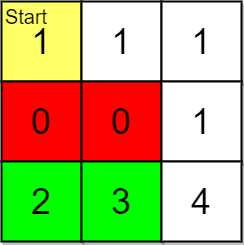
输入:grid = [[1,1,1],[0,0,1],[2,3,4]], pricing = [2,3], start = [0,0], k = 3
输出:[[2,1],[2,0]]
解释:起点为 (0,0) 。
价格范围为 [2,3] ,我们可以选择的物品坐标为 (2,0) 和 (2,1) 。
这些物品的排名为:
- (2,1) 距离为 5
- (2,0) 距离为 6
所以,给定价格范围内排名最高的 2 件物品的坐标为 (2,1) 和 (2,0) 。
注意,k = 3 但给定价格范围内只有 2 件物品。
提示:
m == grid.lengthn == grid[i].length1 <= m, n <= 1051 <= m * n <= 1050 <= grid[i][j] <= 105pricing.length == 22 <= low <= high <= 105start.length == 20 <= row <= m - 10 <= col <= n - 1grid[row][col] > 01 <= k <= m * n
解题思路
方法一:BFS + 排序
我们可以从 出发,使用广度优先搜索找到所有价格在 范围内的物品,将这些物品的距离、价格、行坐标和列坐标存入数组 中。
最后对 按照距离、价格、行坐标和列坐标的顺序排序,取前 个物品的坐标返回。
时间复杂度 ,空间复杂度 。其中 和 分别是二维数组 的行数和列数。
class Solution:
    def highestRankedKItems(
        self, grid: List[List[int]], pricing: List[int], start: List[int], k: int
    ) -> List[List[int]]:
        m, n = len(grid), len(grid[0])
        row, col = start
        low, high = pricing
        q = deque([(row, col)])
        pq = []
        if low <= grid[row][col] <= high:
            pq.append((0, grid[row][col], row, col))
        grid[row][col] = 0
        dirs = (-1, 0, 1, 0, -1)
        step = 0
        while q:
            step += 1
            for _ in range(len(q)):
                x, y = q.popleft()
                for a, b in pairwise(dirs):
                    nx, ny = x + a, y + b
                    if 0 <= nx < m and 0 <= ny < n and grid[nx][ny] > 0:
                        if low <= grid[nx][ny] <= high:
                            pq.append((step, grid[nx][ny], nx, ny))
                        grid[nx][ny] = 0
                        q.append((nx, ny))
        pq.sort()
        return [list(x[2:]) for x in pq[:k]]
复杂度分析
| 指标 | 值 |
|---|---|
| 时间 | Depends on the final approach |
| 空间 | Depends on the final approach |
面试官常问的追问
外企场景- question_mark
They expect you to notice that shortest path on an unweighted grid means BFS, not Dijkstra or DFS.
- question_mark
They are checking whether you can preserve the exact rank order: distance, price, row, then column.
- question_mark
They want a solution that filters unreachable items naturally instead of scanning and ranking the whole matrix blindly.
常见陷阱
外企场景- error
Sorting by price before distance gives the wrong answer because this problem ranks by BFS depth first.
- error
Marking visited after popping instead of after pushing can enqueue the same cell multiple times and bloat the search.
- error
Treating every positive cell as a valid answer is wrong because value 1 is walkable space, not a priced item in range unless the range includes 1, which it never does here since low is at least 2.
进阶变体
外企场景- arrow_right_alt
Keep only the best k items in a max-heap while running BFS instead of sorting every candidate at the end.
- arrow_right_alt
Return the ranked item values as well as coordinates, which adds output formatting but keeps the same BFS ranking logic.
- arrow_right_alt
Change movement rules to eight directions or weighted steps, which would break plain BFS and require a different shortest-path method.