

LeetCode 题解工作台
隔离病毒
病毒扩散得很快,现在你的任务是尽可能地通过安装防火墙来隔离病毒。 假设世界由 m x n 的二维矩阵 isInfected 组成, isInfected[i][j] == 0 表示该区域未感染病毒,而 isInfected[i][j] == 1 表示该区域已感染病毒。可以在任意 2 个相邻单元之间的…
5
题型
4
代码语言
3
相关题
当前训练重点
困难 · 图·搜索
答案摘要
DFS 找到每个病毒区域 `areas[i]`,同时记录每个区域边界节点 `boundaries[i]` 以及周长 `c[i]`。 接着对威胁最大的病毒区域进行隔离,累加所需的防火墙数量。


Interview AiBoxInterview AiBox 实时 AI 助手,陪你讲清 图·搜索 题型思路
题目描述
病毒扩散得很快,现在你的任务是尽可能地通过安装防火墙来隔离病毒。
假设世界由 m x n 的二维矩阵 isInfected 组成, isInfected[i][j] == 0 表示该区域未感染病毒,而 isInfected[i][j] == 1 表示该区域已感染病毒。可以在任意 2 个相邻单元之间的共享边界上安装一个防火墙(并且只有一个防火墙)。
每天晚上,病毒会从被感染区域向相邻未感染区域扩散,除非被防火墙隔离。现由于资源有限,每天你只能安装一系列防火墙来隔离其中一个被病毒感染的区域(一个区域或连续的一片区域),且该感染区域对未感染区域的威胁最大且 保证唯一 。
你需要努力使得最后有部分区域不被病毒感染,如果可以成功,那么返回需要使用的防火墙个数; 如果无法实现,则返回在世界被病毒全部感染时已安装的防火墙个数。
示例 1:
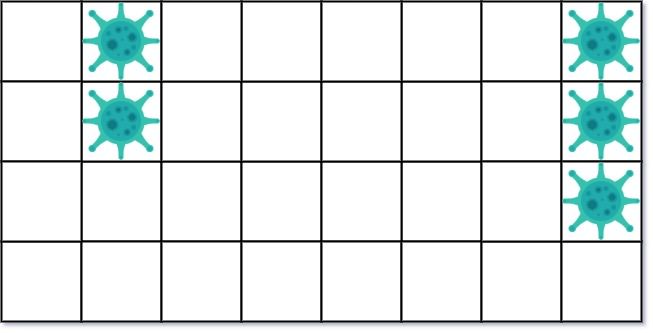
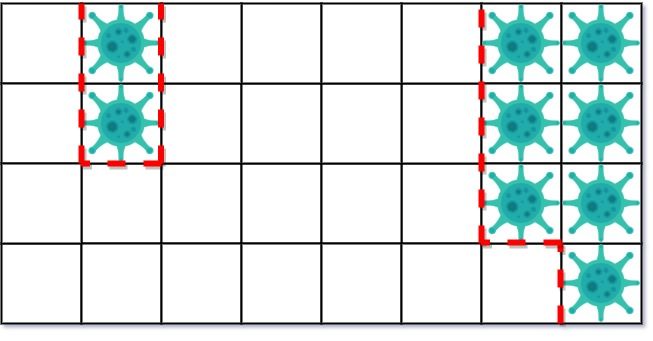
输入: isInfected = [[0,1,0,0,0,0,0,1],[0,1,0,0,0,0,0,1],[0,0,0,0,0,0,0,1],[0,0,0,0,0,0,0,0]] 输出: 10 解释:一共有两块被病毒感染的区域。 在第一天,添加 5 墙隔离病毒区域的左侧。病毒传播后的状态是:第二天,在右侧添加 5 个墙来隔离病毒区域。此时病毒已经被完全控制住了。
示例 2:
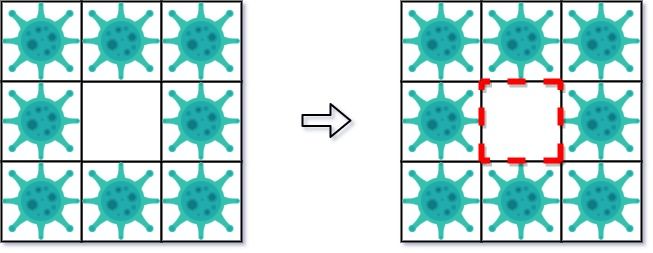
输入: isInfected = [[1,1,1],[1,0,1],[1,1,1]]
输出: 4
解释: 虽然只保存了一个小区域,但却有四面墙。
注意,防火墙只建立在两个不同区域的共享边界上。
示例 3:
输入: isInfected = [[1,1,1,0,0,0,0,0,0],[1,0,1,0,1,1,1,1,1],[1,1,1,0,0,0,0,0,0]]
输出: 13
解释: 在隔离右边感染区域后,隔离左边病毒区域只需要 2 个防火墙。
提示:
m == isInfected.lengthn == isInfected[i].length1 <= m, n <= 50isInfected[i][j]is either0or1- 在整个描述的过程中,总有一个相邻的病毒区域,它将在下一轮 严格地感染更多未受污染的方块
解题思路
方法一:DFS 暴力模拟
DFS 找到每个病毒区域 areas[i],同时记录每个区域边界节点 boundaries[i] 以及周长 c[i]。
接着对威胁最大的病毒区域进行隔离,累加所需的防火墙数量。
剩余的病毒区域向外感染一个区域。
class Solution:
    def containVirus(self, isInfected: List[List[int]]) -> int:
        def dfs(i, j):
            vis[i][j] = True
            areas[-1].append((i, j))
            for a, b in [[0, -1], [0, 1], [-1, 0], [1, 0]]:
                x, y = i + a, j + b
                if 0 <= x < m and 0 <= y < n:
                    if isInfected[x][y] == 1 and not vis[x][y]:
                        dfs(x, y)
                    elif isInfected[x][y] == 0:
                        c[-1] += 1
                        boundaries[-1].add((x, y))

        m, n = len(isInfected), len(isInfected[0])
        ans = 0
        while 1:
            vis = [[False] * n for _ in range(m)]
            areas = []
            c = []
            boundaries = []
            for i, row in enumerate(isInfected):
                for j, v in enumerate(row):
                    if v == 1 and not vis[i][j]:
                        areas.append([])
                        boundaries.append(set())
                        c.append(0)
                        dfs(i, j)
            if not areas:
                break
            idx = boundaries.index(max(boundaries, key=len))
            ans += c[idx]
            for k, area in enumerate(areas):
                if k == idx:
                    for i, j in area:
                        isInfected[i][j] = -1
                else:
                    for i, j in area:
                        for a, b in [[0, -1], [0, 1], [-1, 0], [1, 0]]:
                            x, y = i + a, j + b
                            if 0 <= x < m and 0 <= y < n and isInfected[x][y] == 0:
                                isInfected[x][y] = 1
        return ans
复杂度分析
| 指标 | 值 |
|---|---|
| 时间 | Depends on the final approach |
| 空间 | Depends on the final approach |
面试官常问的追问
外企场景- question_mark
Candidate demonstrates a strong understanding of DFS and its application to this problem.
- question_mark
The ability to identify and prioritize the most threatening viral regions indicates an efficient solution approach.
- question_mark
Clear understanding of how to simulate the virus spread and use walls to contain it will be crucial.
常见陷阱
外企场景- error
Failing to track the boundaries of infected regions properly can lead to incorrect wall placement.
- error
Not correctly assessing which viral region will spread the most can result in inefficient containment.
- error
Over-complicating the algorithm without optimizing the DFS can lead to performance issues on larger grids.
进阶变体
外企场景- arrow_right_alt
Consider adding additional constraints, such as limiting the number of walls that can be placed.
- arrow_right_alt
Modify the problem to allow walls to be built in multiple regions simultaneously.
- arrow_right_alt
Implement the solution using a Breadth-First Search (BFS) approach instead of DFS to compare performance and efficiency.