

LeetCode 题解工作台
判断矩形的两个角落是否可达
给你两个正整数 xCorner 和 yCorner 和一个二维整数数组 circles ,其中 circles[i] = [x i , y i , r i ] 表示一个圆心在 (x i , y i ) 半径为 r i 的圆。 坐标平面内有一个左下角在原点,右上角在 (xCorner, yCorner…
6
题型
6
代码语言
3
相关题
当前训练重点
困难 · 数组·数学
答案摘要
根据题意,我们分情况讨论: 当 `circles` 中只有一个圆时:


Interview AiBoxInterview AiBox 实时 AI 助手,陪你讲清 数组·数学 题型思路
题目描述
给你两个正整数 xCorner 和 yCorner 和一个二维整数数组 circles ,其中 circles[i] = [xi, yi, ri] 表示一个圆心在 (xi, yi) 半径为 ri 的圆。
坐标平面内有一个左下角在原点,右上角在 (xCorner, yCorner) 的矩形。你需要判断是否存在一条从左下角到右上角的路径满足:路径 完全 在矩形内部,不会 触碰或者经过 任何 圆的内部和边界,同时 只 在起点和终点接触到矩形。
如果存在这样的路径,请你返回 true ,否则返回 false 。
示例 1:
输入:X = 3, Y = 4, circles = [[2,1,1]]
输出:true
解释:
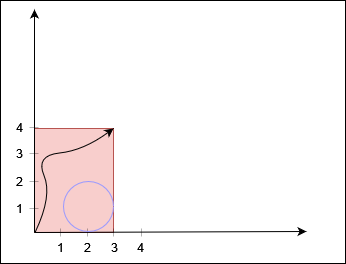
黑色曲线表示一条从 (0, 0) 到 (3, 4) 的路径。
示例 2:
输入:X = 3, Y = 3, circles = [[1,1,2]]
输出:false
解释:
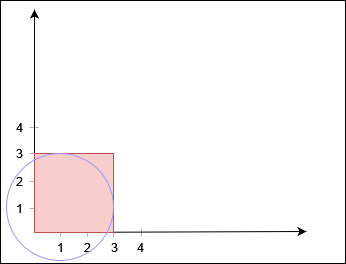
不存在从 (0, 0) 到 (3, 3) 的路径。
示例 3:
输入:X = 3, Y = 3, circles = [[2,1,1],[1,2,1]]
输出:false
解释:
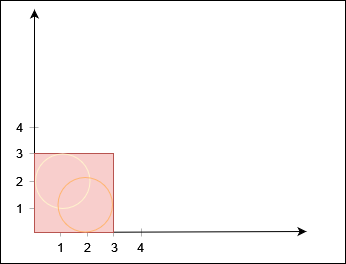
不存在从 (0, 0) 到 (3, 3) 的路径。
示例 4:
输入:X = 4, Y = 4, circles = [[5,5,1]]
输出:true
解释:
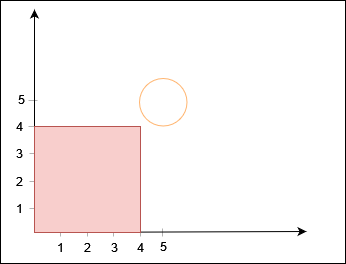
提示:
3 <= xCorner, yCorner <= 1091 <= circles.length <= 1000circles[i].length == 31 <= xi, yi, ri <= 109
解题思路
方法一:DFS + 数学
根据题意,我们分情况讨论:
当 circles 中只有一个圆时:
- 如果起点 在圆内(包括边界),或者终点 在圆内,那么无法满足“不触碰圆”的条件;
- 如果圆与矩形的左侧或上侧有交点,且与矩形的右侧或下侧有交点,这种情况下,圆会阻断从矩形左下角到右上角的路径,也无法满足“不触碰圆”的条件。
当 circles 中有多个圆时:
- 与上述情况类似,如果起点或终点在圆内时,无法满足“不触碰圆”的条件。
- 如果有多个圆,多个圆之间可能在矩形内相交,合并形成更大的障碍区域。只要这个障碍区域与矩形的左侧或上侧有交点,且与矩形的右侧或下侧有交点,那么无法满足“不触碰圆”的条件。如果相交区域不在矩形内部,不能进行合并,因为相交的区域无法阻断矩形内部路径。另外,如果相交的区域有一部分在矩形内,有一部分在矩形外,这些圆都可以作为搜索的起点或终点,可以合并,也可以不合并。我们只要任选相交的其中一个点,如果这个点在矩形内,我们就可以将这些圆合并。
根据上述分析,我们遍历所有圆,对于当前遍历到的圆,如果起点或终点在圆内,我们直接返回 false。否则,如果这个点没有被访问过,且这个圆与矩形的左侧或上侧有交点,我们就从这个圆开始进行深度优先搜索,搜索过程中,如果找到了一个圆,它与矩形的右侧或下侧有交点,说明圆形成的障碍区域阻断了从矩形左下角到右上角的路径,我们就返回 false。
我们定义 表示从第 个圆开始进行深度优先搜索,如果找到了一个圆,它与矩形的右侧或下侧有交点,返回 true,否则返回 false。
函数 的执行过程如下:
- 如果当前圆与矩形的右侧或下侧有交点,返回
true; - 否则,我们将当前圆标记为已访问;
- 接下来,遍历其它所有圆,如果圆 没被访问过,且圆 和圆 相交,且这两个圆的其中一个交点在矩形内,我们就继续从圆 开始进行深度优先搜索,如果找到了一个圆,它与矩形的右侧或下侧有交点,返回
true; - 如果没有找到这样的圆,返回
false。
上面的过程中,我们需要在圆 和 之间判断是否相交,如果两个圆相交,那么它们的圆心之间的距离不超过两个圆的半径之和,即 。
我们还需要寻找两个圆的一个交点,我们取一个点 ,满足 ,如果两圆相交,那么点 一定在交集中,此时 ,解得 ,同理,有 。只要这个点在矩形内,我们就可以继续进行深度优先搜索,即满足:
时间复杂度 ,空间复杂度 。其中 为圆的数量。
class Solution:
    def canReachCorner(
        self, xCorner: int, yCorner: int, circles: List[List[int]]
    ) -> bool:
        def in_circle(x: int, y: int, cx: int, cy: int, r: int) -> int:
            return (x - cx) ** 2 + (y - cy) ** 2 <= r**2

        def cross_left_top(cx: int, cy: int, r: int) -> bool:
            a = abs(cx) <= r and 0 <= cy <= yCorner
            b = abs(cy - yCorner) <= r and 0 <= cx <= xCorner
            return a or b

        def cross_right_bottom(cx: int, cy: int, r: int) -> bool:
            a = abs(cx - xCorner) <= r and 0 <= cy <= yCorner
            b = abs(cy) <= r and 0 <= cx <= xCorner
            return a or b

        def dfs(i: int) -> bool:
            x1, y1, r1 = circles[i]
            if cross_right_bottom(x1, y1, r1):
                return True
            vis[i] = True
            for j, (x2, y2, r2) in enumerate(circles):
                if vis[j] or not ((x1 - x2) ** 2 + (y1 - y2) ** 2 <= (r1 + r2) ** 2):
                    continue
                if (
                    (x1 * r2 + x2 * r1 < (r1 + r2) * xCorner)
                    and (y1 * r2 + y2 * r1 < (r1 + r2) * yCorner)
                    and dfs(j)
                ):
                    return True
            return False

        vis = [False] * len(circles)
        for i, (x, y, r) in enumerate(circles):
            if in_circle(0, 0, x, y, r) or in_circle(xCorner, yCorner, x, y, r):
                return False
            if (not vis[i]) and cross_left_top(x, y, r) and dfs(i):
                return False
        return True
复杂度分析
| 指标 | 值 |
|---|---|
| 时间 | Depends on the final approach |
| 空间 | Depends on the final approach |
面试官常问的追问
外企场景- question_mark
Look for an understanding of graph theory applied to geometry.
- question_mark
Assess the candidate's ability to efficiently handle obstacles (circles) in pathfinding.
- question_mark
Evaluate how well the candidate combines algorithmic approaches like DFS/BFS with mathematical geometry.
常见陷阱
外企场景- error
Ignoring edge cases like when the two corners are inside a circle or when circles touch the rectangle boundaries.
- error
Not properly handling circle intersection checks and assuming direct paths without verifying geometry.
- error
Overcomplicating the problem with unnecessary computations instead of leveraging efficient graph traversal algorithms.
进阶变体
外企场景- arrow_right_alt
What if the rectangle's top-right corner changes dynamically during the pathfinding process?
- arrow_right_alt
How does the solution change when the number of circles is significantly larger (e.g., 1000+)?
- arrow_right_alt
How would the approach change if there were multiple rectangles or obstacles to consider simultaneously?